

Tesla Model S, Formula Drift Seattle

Go home Ab Roller, you’re done. Brute strength alone won’t cut it anymore. Modern science understands that human core mechanics are so much more than vanity abs. The core dynamically stabilizes and distributes force loads to control rotational torque force across the entire kinetic chain.
The human machine is controlled by neural connections and muscle memory patterning – it learns strength and power. Proper core training is more than raw strength, it is also software training. Smart training with the core wheels is a software and hardware upgrade all in one.
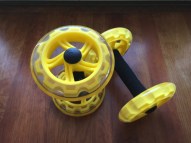 STPro Ninja Gear Just the way we like it- lightweight, portable and effective. Like the wheels on a race car, hips and shoulders need a high performance chassis for high performance movement. These new wheels train just that – a dynamic, efficient and powerful chassis.
STPro Tech Essentials
Answering the great burning question…

Why am I doing this?
Use only that which works and take it from any place you can find it – Bruce Lee – Tao of Jeet KuneDo
Biomechanics Breakdown
Sir, Yes Sir! Colonel Potter, we did get to the moon on less technology than a cell phone. And No Sir, there is no replacement for integrity, commitment and discipline. But sometimes duct tape and bailing wire just won’t fix everything. The Ab wheel may have been good enough in your day, but that day was also marked by lumbar dysfunction, unnecessary pain and multiple shoulder surgeries. It’s time to put that old wheel away and upgrade our core.
Advantages of the New Fangled Core Wheels

- Trains an intelligent shoulder girdle connection
- Shoulder function is primarily neural patterning, aka human software
- Every rep trains complex support patterns for sturdy, capable shoulders
- Avoids compromising shoulder joint
- No risky loaded shoulders in internal rotation or “caving in” on the roll-out
- Trains alternative superior patterns that form the strongest base of support for our human chassis for weight bearing
- Builds functional engagement in upper obliques
- essential for arm strength – aka, the front wheels on a dynamic chassis
- essential for force transfer through the center of gravity – lumbar mechanics
- essential for force transfer from the gluts – aka, the back wheels (power) on a dynamic chassis
- Variations replicate the classic “Is Ys and Ts” from a press position – making this an excellent cross-train exercise for shoulder rehab and shoulder prehab, rotational sports (tennis-golf-baseball), weight training, swimming and mountaineering.
Dis-Advantages of The New Fangled Core Wheels
- The Core Wheels can do significant damage to the Ego.
- You have to retire one more piece of equipment to the Island of Lost Toys.
As to Why in general – in studio training, Studio T uses core wheel roll-outs as a foundational test and form refresher. If you can’t do moderate sets of these with some variations, your chassis isn’t stable enough for more advanced movements in the STPro CrashFit Happens(TM) series due to injury risk.
STPro Tech: The Make-or-Break Form Tip
Stay calm and focused in this move.
The spine and core stabilize dynamically to manage force loads. This is known as “bracing” – but this generally misused training buzzword is misleading. Solid coaching tips below.
Make-or-Break Core Wheel Coaching


Told to “brace”, many strong people tend to over-brace by clamping, neck-clinching, glut gripping and breath-holding. These may feel as if they are creating stability – but it is an illusion. Not only do these habits lead to an inefficient and unstable kinetic chain (wobbly, robotic , injury prone), they generally “dump” into the lumbar… and lumbar goes boom.
STPro coaching for excellence: Stay Calm. Breathe. Embrace the Suck.
STPro Core-Wheel Challenge
GOALS
FULL ROLLOUT
VARIATIONS: SINGLE-ARM FORWARD (I’S), SINGLE-ARM ANGLE (Y’S), CRUCIFIX PUSHUP (T’S), SINGLE ARM SIDE (ARCHERS)
GETTING STARTED
Below, Super-Mover Ms. E learning the core wheels for the first time. Her pull-up max is somewhere around 18-20, depending on her mood. For Ms. E, the advantage of training with core wheels is integrating back and extremity strength onto a strong chassis. The core-wheel challenge is also a pre-req for STPro TacFit workouts, which E prefers for the challenge and fun of it.


SETUP
- Set up a safety bumper
- Kneeling – shoulders directly over hands
- Drop hips – aim tailbone down the backs of the leg
- With a stick – 3 points stay on the stick: back of head, mid-back between shoulder blades and sacrum – this proprioception assists the nervous system in calibrating a strong “neutral” posture where the thoraco-pelvic canister is strongest in weight lifting and load bearing – there’s a range to it… some wiggle room – the stick is just to “find it” at this odd angle with hands on a rolling thingy
- Tops of feet flat – keep front of hips open and long
- Stay in the shakes until the body has a chance to figure it out (brain training)
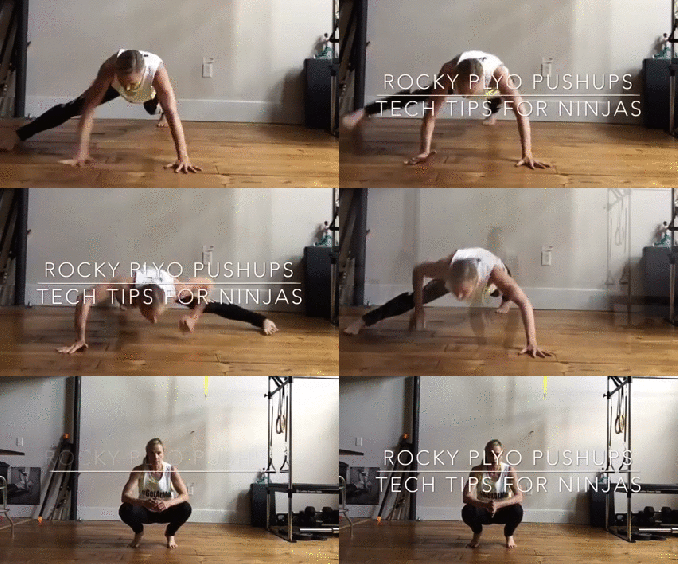
The closing move of the STPro TacFit routine is a dynamic lumbar release on the rings. The core wheel moves prepare the core chassis to calculate the dynamics of control in a ring pike and skill based core control moves such as single-arm plyometric push-ups. Edie was able to accomplish all three in two training advance sessions by applying her excellent training habits in the weight room to learn new forms.
IN PRACTICE – SOLID LEARNING ON ROLLOUTS
Ms. E has the requisite strength across her whole kinetic chain for this move. She weight trains consistently, and is almost STPro CrashFit Happens(TM) ready. Ms. E is willing to share her training session to help demonstrate the learning process on the first attempts. As she has excellent strength training experience, watch her “head game” as she experiments with controlling her torso and form. She makes it look easy.
SUPER-MOVER CONTROL
- Slow roll to furthest point without loss of control
- Stay in the shakes. Shakes are stabilizer muscles running their practice reps for optimal core load balancing
- Find shaky spots and move through them deliberately integrating controlled breathing
- Embrace the suck. These are short, high-impact sets. Rush through them without awareness and it’s likely a waste of time
SETTING THE PATTERN
In practice in the studio, we reinforce the core connection with related moves (synergistic training: see more here Mission) – generally deep hip flexion- to open the lumbar, activate deep low abdominals and load the shoulders to activate the shoulder girdle core connection. Activating core engagement muscle patterns in related moves gives the nervous system practice repetitions to apply the pattern and write to muscle memory.
- TRX Front Shoulder Plank
- Pilates Chair Pikes
- TRX Atomic Pike or Pilates Reformer Plank and Elephant
- Pilates Chair Oblique Pikes or TRX Side Shoulder Plank
- Pilates Chair Knee Tucks or Fitball Knee Tucks or TRX Atomic Crunch
- Mat tuck-ups and deck squats
- Deep squats – Third World squat – Deck squats
- Inchworms (with pike – round through lumbar) & Kongs
- Pilates Rolldown from standing
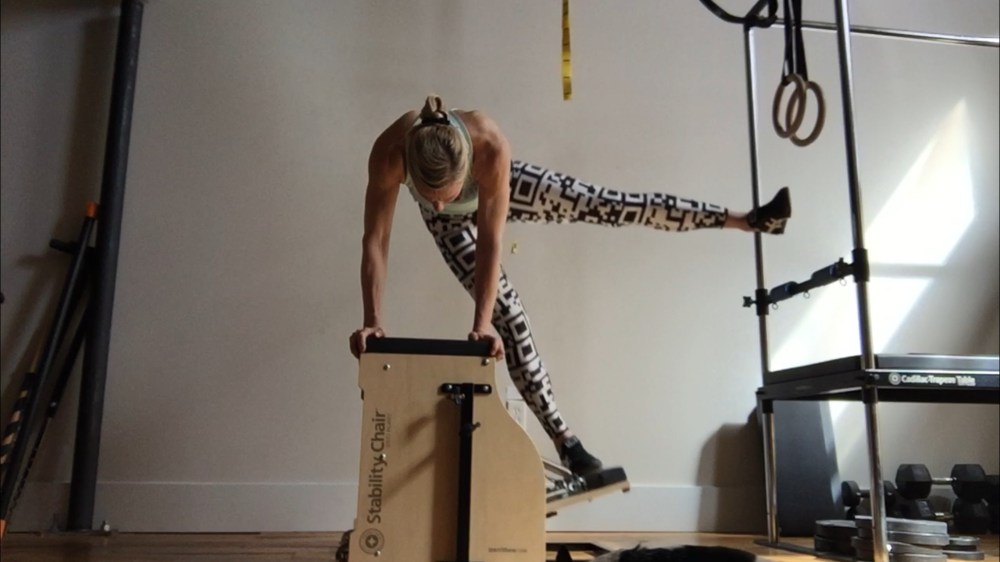
Example dynamic core patterning reinforcement – advanced oblique pikes on pilates chair.
STPro Core-Wheel Strategy Fails
While every person is unique, there are some common strategies seen in practice. And like Mike Tyson says, “Everyone thinks they have a strategy until they get punched in the face.”

In other words,
some strategies are better than others.
The subconscious constantly calculates strategies for executing a movement. When muscles fatigue a substitution occurs, aka, breaking form.

Hunch with Lumbar Sag – The issue is probably glut and deep low abdominal engagement not working to resist rotational torque around the hip joint. Gravity is pulling the spine down into a sag and lumbar hyper arch. Like the broken back on a donkey. Because the core biomechanically works as a unit, the saggy low ab connection disconnects shoulder girdle, dragging more dangerous shoulder forms along with it (winging, shoulders sloppy, hanging on ligaments).
This pattern happens in really strong people – all the time. And it is easy to fix in one training session by doing moves that activate the centers that need to turn on to lock a core connection from both ends.
Remedial move for requisite strength is usually a front shoulder plank, plank and push-ups. These are safer forms, all with high impact results. See here for how to train your own muscle engagement for a solid core power form beginning with a push-up/plank form: Push-up and plank mechanics
At a high level, engaging muscle patterns at critical power stabilizing centers – with awareness and deliberate engagement for repeated repetitions in one workout – will tend to fire a connected core right into action. This creates the human dynamic chassis. (Technically, optimal engagement to form a hydraulic cylinder in the thoraco-pelvic canister. In English, your core is solid as a rock.)

Side view of muscle engagement centers – these control the torso and are key points in forming an effective, stable core connection.
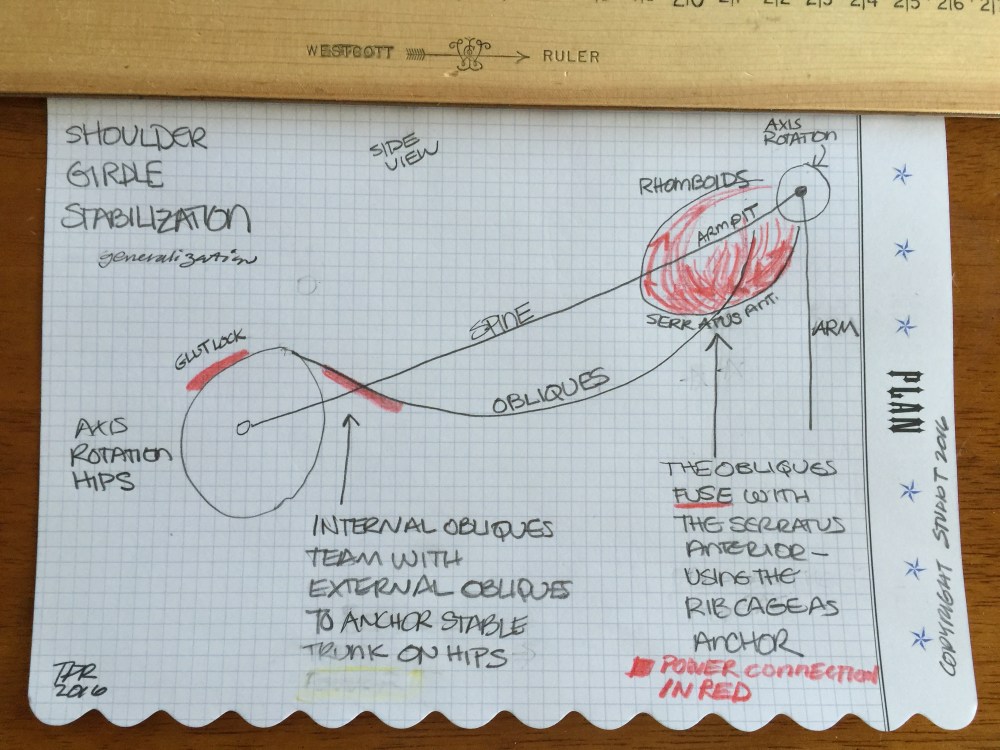
Front view of the essential engagement for effective core stabilization.


Copyright Studio T, LLC 2016





 Don’t let em do it to ya
 STPro
STPro 