It’s all physics. Human bones take on various shapes, curves and angles. The body functions in relation to gravity. Like an amazing machine, each human has a unique kinetic chain composed of a unique configuration of levers. To make it even more complex, human muscular attachments and nerve pathways can take on many configurations. So, whether we like it or not, one person may have a biomechanical advantage over another. It’s not fair. It’s physics.
Sadly, some folks just aren’t too interested in the physics of the matter. And even if they are, without access to sophisticated technology, a trainer or PT has to use external assessments to “guesstimate” a person’s general configuration. This field is evolving, and modern advancements in research and technology enable scientists and researchers to measure, analyze and catalogue bone shapes and structures by category.
So much for the “Ass to Grass” mythology. Hips can have very different load bearing capacities because of their mechanical design. Just ask a Powerlifter. Those guys know from experience what it takes Stanford Researchers MRIs and protractors to figure out: we’re not all built to be Powerlifters.
If this gives you the blues, Howlin’ Wolf has got somethin’ to cheer you up. Maybe you’re just built for comfort…
Still not convinced? Here’s Dr. Stuart McGill’s expert opinion.
STPro is on hour 3 of the 20hrs of the Assessment Series detailed below, and working this into testing with the STPro Advanced Movers. Some of this detail may fall into the Deep Chasm of OverThinking. We shall see. STPro will post again after a year or so of Field Testing. It may be that this doesn’t do much to add health or performance in practice. Meaning it’s more useful for researchers and surgeons.
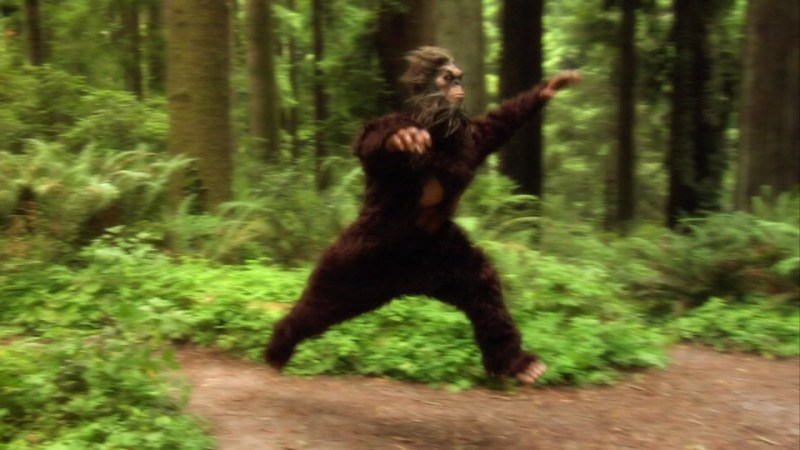
Meanwhile – if it doesn’t feel right to DEEP SQUAT – physics may be working against you. Be careful out there, pay attention or Sasquatch might getcha!
Studio T Pro Edition is dedicated to professional training using synergistic routines incorporating biomechanics into applied practice. We are on a never ending mission for excellence.
Feedback matters. Get at me. Share & like, comment and email questions. Play stump the trainer with a question. Click to get things started: Get At Me…
Are we rolling, are we not rolling? Are we sick of hearing about rolling? We should be. There is no science behind it.
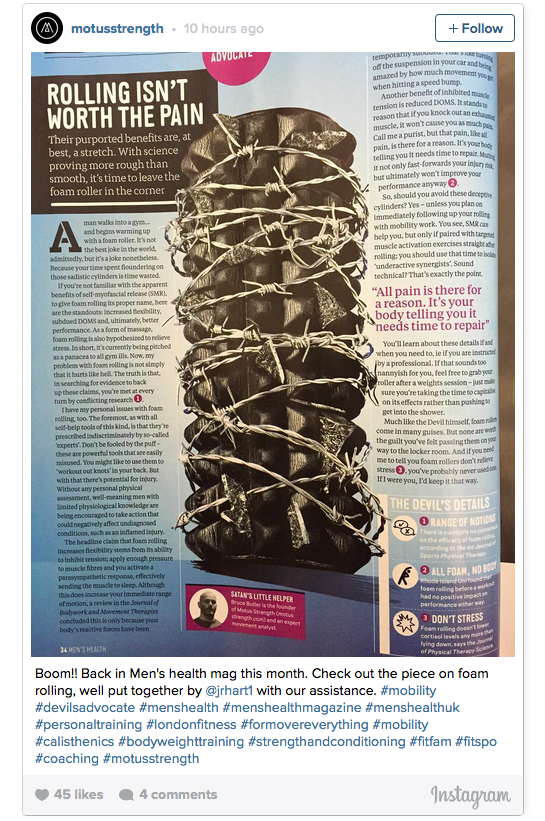
From ST Pro Tech, deep bows of thanks and respect to the trainers at Motus for getting this published:
Jumping from One Study to Another on Stepping Stones of Anectdotal Evidence
Anecdotal evidence is when something happens once. Just because something happens in the lab doesn’t make it a finding. Most academic studies are for specific and highly restricted cohorts and due to our limitations in measurement, restricted to only very small aspects of the overall kinetic chain or specific physiological states. Like when you’re high. That’s a physiological state.
But in spite of the practical limitations in research findings, it is standard practice for humans (including researchers) to Jump to Conclusions – right down into the pit of exercise despair.
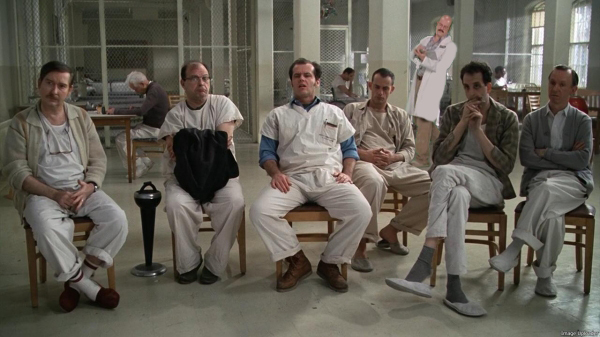
Image: One Flew Over the Cuckoo’s Nest with Tobias Funk Photobomb
While academic studies and practice are limited, most commercial publications are even worse. They are not subject to peer review and are often sponsored by product manufacturers and business interests that benefit from the alleged study findings.
Leading the charge! A slew of hot exercise models!
Foam Rolling & Fads – All F Words
This is what Men’s Fitness posted about foam rolling back on May 22, 2015. You can’t miss it. Their team of 20yr old SEO optimization experts will make sure that this pithy blurb is the first thing you see on a search engine query on “foam rolling”.
The blurb is titled “The Truth About Foam Rolling”. It refers to studies and findings that don’t exist. But it reads as if it is a reliable finding.
“Most trainers recommend foam rolling before a workout for good reason: A study in The Journal of Strength & Conditioning Research found that rolling out for just a minute can improve your range of motion, while a study in Medicine & Science in Sports & Exercise discovered that rolling after an intense workout can relieve soreness over the next two days.”
We can use common sense to show how useless this is in a jiffy:
“most trainers”
Who are “most trainers”? What are their credentials? Did they survey all trainers to calculate most? Do they even care?
“a study”
What study? What’s the title and publication date? Have the findings been worked and tested in the field? Can I get the number of that hot exercise model?
“rolling out”
What does “rolling out” even mean? Are we rolling on muscle? Are we rolling on connective tissue? Are we rolling a joint and smoking it too?
“range of motion” (ROM)
Technically, ROM refers to action around a joint. Did this magical study cover every joint? Were the conditions repeatable for different biochemical states such as fatigue or stress? Do you guys just like using the words Range of Motion?
“relieve soreness”
Was the exercise too intense? Is the soreness from overexertion? Wait, is the objective ROM or pain relief? Is there an objective here at all?
** updated 6/19/16 ** – There was originally a link to the article referenced above in the original post — STPro just pulled the link *** as my buddy in SEO (search engine) optimization warned STPro that these big media sites can use big money nefarious tactics to bury this article. The Men’s Fitness article is easy to find – they made sure of that – you can just google for “Foam Rolling” – it will pop up front and center in big red letters — it’s an “SEO” article – meant to drive traffic to their site, but lacking in content. In theory, Google’s search engine removes these “hack” articles. Yeah, and Foam Rolling is based on a “study” that magically, never appears when we google for “foam rolling”.
Goodbye, Prison Mattress – Hello, Biomechanics
Just a few terms we should know to defend ourselves:
Mobility refers to joints
Flexibility refers to muscles
Range-of-motion refers to joints
Reality of where we are scientifically:
Mobility is a complicated mechanical process
Muscle length is a complicated neurological process
Muscles are sensitive to complex physiological states
Experts do not agree
Hot new trends we are still studying:
Fascia surrounds all muscle compartments and impacts range of motion
Fascia has the tensile strength of 300lbs
Taking out all the soft tissue, fascia alone will hold the shape of the human body
We know it does things, but we’re not sure what
We Can Solve the Problem Ourselves – Train for Gains, Not Joint Pain
Awareness that our body has the processes to manage itself if we train it right
There is no quick and easy fix involving foam
Mobility and flexibility take years to develop
Mobility and flexibility are also a function of their physiological environment – hormones, what we eat etc.
Incorporate dynamic flexibility into workouts immediately
Adopt a synergistic training mindset. Plan out new routines. Studio T Pro Edition is a new site with a bold mission for training that doesn’t send you down the pit of joint despair: Mission DIY Synergy – Be Your Own Expert
Load joints from dynamic angles for ROM & dynamic flexibility
Example “The Antonio Brown” an advanced pilates move for skill position athletes.
Add plyometric movements with dynamic stretches into workouts
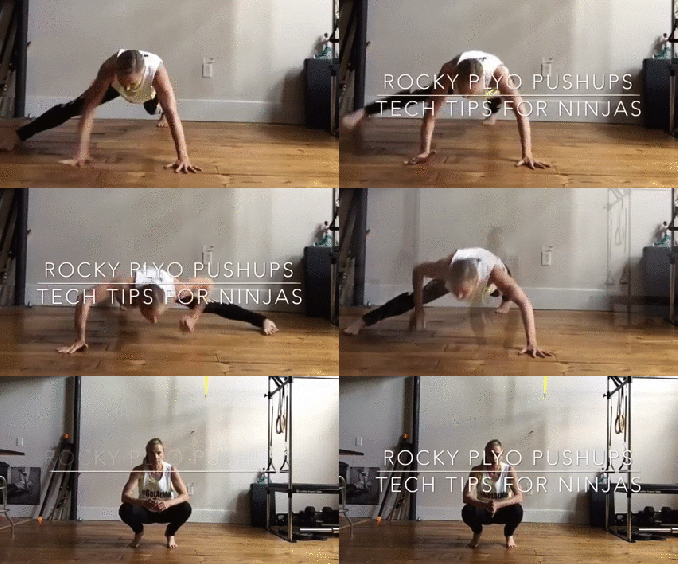
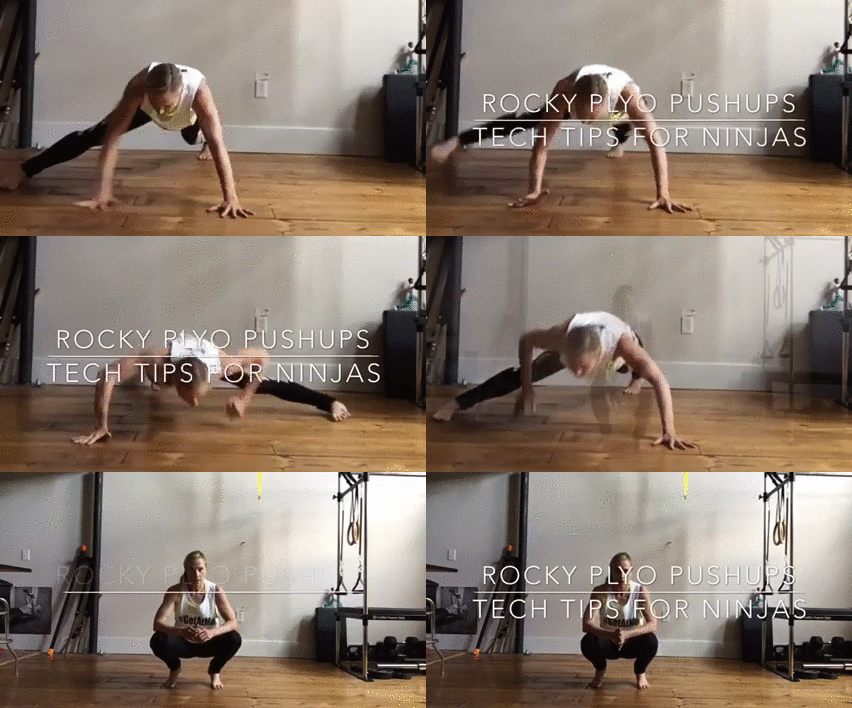
Example “Rocky Plyo Single-Arm Pushups”
Don’t let em do it to ya
Studio T Pro Edition is dedicated to professional training using synergistic routines incorporating biomechanics into applied practice. We are on a never ending mission for excellence.
Feedback matters. Get at me. Share & like, comment and email questions. Play stump the trainer with a question. Click to get things started: Get At Me…
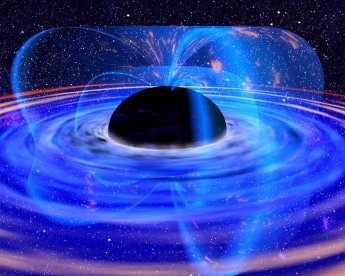
A black hole is a region of spacetime exhibiting such strong gravitational effects that nothing—including particles and electromagnetic radiation such as light—can escape from inside it. Well, except your membership dues. They will come flying right out. That great big sucking sound is coming from your wallet.
So are you saying they “don’t work”?
First, let’s be clear about the Crunch Form being discussed — the lying on the floor crunches curl straight up – the newer version of sit-ups.
OK, now how to measure if something “works”?
Consider possible objectives:
Looks – Yes
Muscle Puff – Yes
Intelligent core connection – Unlikely
Increased strength in load bearing – Unlikely
Lumbar support – Unlikely
Remedial or Foundational Core Abdominal Training – Yes But…
Only if no smashing, chin jutting and neck pulling
Great for post-injury recovery
Great for evening out strength in the abdominal wall
Strengthening the deep low abdominals, where we tend to need it most – Unlikely
Integrated functional benefits – Unlikely
Improvement in weight lifting forms – Maybe
The Big Crunch
Oh here’s where it gets worse. Consider The Big Crunch in physics. The Big Crunch is one of the scenarios predicted by scientists in which the Universe may end. It theorizes that the Universe’s expansion after the Big Bang will not continue forever. Instead, it will stop expanding and the universe will collapse into itself, pulling everything with it until it eventually turns into the biggest black hole ever.
If the vanilla crunch is a black hole, then Canoes are The Big Crunch. The biggest black hole of biomechanical misery conceivable. Because the movement grinds across the lumbar, it loads up to about 500lbs of torque force on a vulnerable spine. While it targets the obliques, due to lumbar torsion, this is a High Risk / Low Return movement. Unless your idea of Return includes low-back pain, herniated disks and oxycodone.
Discussion of alternatives shared in the last section of the post, but not until we bam through a couple more fitness industry marketing myths.
Lumbar Torsion in Action – this was the leading image from a Sports Rehab site on Core Training – an article chock full of site traffic generating key words and little substance – it’s titled the Best Exercises for Core – and it propones that a key benefit of core exercises is to relieve back pain. The irony – their leading marketing-attention-getting-image features a lumbar crusher. That grunting sound when we do it? It’s the lumbar begging for death.
The “experts” won’t admit that the human body is still more intelligent than our current understanding. The human body is an excellent mathemetician. Its smarter than your trainer, doctor or PT and even Studio T Pro. The body is a genius. It LOVES solving new problems. The core stabilizes, executes and enables problem solving – but it has to train the practice patterns of optimal core execution strategies to write them to muscle memory. It then executes movement based on these stored muscle memory patterns. Training exercises that train torsion will then store torsion patterns in the body. These can creep into everything from picking up a box off the floor to dangerous execution patterns in athletics.
If you have weak spots in the core – remedial core training, especially after injury, is highly effective from plank or using the safe pilates reformer – and *immediately* get onto training the mind and body with solid execution patterns in standing or kneeling or lunge stances. You’ll know your core is firing well because your moves will be stronger and smoother. Developing and using body awareness is the key for effective training. All the anatomy charts and diagrams cannot do the work our own bodies can manage easily. But it takes practice and focus.
The companion article to this post – focuses training the core to do what it likes – generate quality movements. It was the Studio T original answer to the simple question: “What Do You Think of Crunches”. Let’s get off the ground and train for an intelligent, powerful core. Here’s the post:Smart Core Means Smart Training
Massive Crunch and Core Myths
The “Core” is just abs. Wrong. The “Core” is not just the front abdominal wall. We exist with gravity on all four sides – like a tube. So the core is the entire musculature that connects the rib cage to the pelvis. Its the front, sides and back of your torso. Like a “core”. Not a pancake. It is literally a flexible cylinder that can calculate on the fly the appropriate level of “stiffness” or force to resist gravity.
Core is just strength. Wrong. It runs everything that happens with the extremities by establishing a solid base of support. It is an incredible engineer of dynamic force against gravity – on the fly. It started its calculations when you learned to walk. It is literally amazing and so far, we have engineered nothing as sophisticated as our own body. The core, as a unit, integrates bone, tissue and muscles in complex layers to drive every move we make. As our base of support, it stabilizes the hips so you don’t wobble when you run or walk (if you see a runner with hips wobbling – it’s probably weak core musculature around the hips). It is constantly analyzing, calculating and refining strategies to effectively move the human body relative to gravity.
Core is not in the back. Wrong. At the center of your body is the spine. Expand out in 360 degrees from that, and you have a tube. At the core, we are pretty much a tube. A fantastic tube of awesome. Not convinced? Just squeeze me. Awesome comes out.
Just focus on plank. Wrong. As far as athletics go, the obliques are really the smarties. They like challenging tasks and learning new skills. In terms of the core musculature, by land mass, we are mostly obliques. (Lats are the broadest muscle of the back, and they can assist with stabilization when the arms are fixed, but technically, the lats are considered a Prime Mover. And they can do their job best when the core is effective at stabilization.) If you want to really increase strength, skill and fitness level – for *any* physical activity – think about the obliques. They mobilize and stabilize on every movement. They like to play. So punch, kick, rotate, twist, run at random angles, have fun.
Don’t worry about the deep low abdominals. Wrong. The importance of strength here cannot be overstated. And worse, we tend to get weak there – and the lumbar lacks support and there is a cascade failure of compensation by other muscles to kick in – our thoraco-pelvic canister, aka tube, gets wobbly and our base of support unstable – eventually we can expect the shoulders to give out along with the rest. Deep low abdominal strength & control is usually the FIRST THING I fix in big strong guys. This is such a common issue that Studio T developed a generalized synergistic routine and nicknamed: The Hit It & Quit. First run some basic exercises to activate the deep low abs – fatigue them a bit so there is enough direct feedback in subsequent moves (pain and grunting, ha!) – then proceed through a series basic training forms with a solid lumbar that is supported by the deep low abs and gluts. With practice, the stronger form is written to muscle memory. Now we have an improved core by integrated strength training. Now the core is more effective at doing its job: dynamically generating a sturdy canister as a base of support. In short, lack of deep low abs throws off the lumbar and this cascades into all movements. It ruins a push-up, allows wobble in any athletic stance, compromises weight lifting form and leaves shoulders vulnerable to injury on every rep.
Test your Push-up to see how your deep low abs are firing:
Bonus Round of Myths
And last but by no means the least Myth, a Myth that Towers above all other Myths: 30 Minute Abs. If there ever was a commercialized fitness marketing load of Hoo, this is it. The core is meant to constantly dynamically calculate and control the body in space. Ground based crunches and fire hydrants for 30 minutes are nothing short of an insult. If the move truly is pure abdominals, we couldn’t do it for more than six minutes tops. Test it with a gymnastics hollow ab hold – arms overhead – and for a minute. Try it for two minutes. Even gymnastics ring competition routines, the apex of Abs, only last a few minutes.
Photo: Yang Wei, China
during the men’s individual all-around competition at the Beijing 2008 Olympics in Beijing, Wednesday, Aug 13, 2008. (AP Photo/Julie Jacobson)
Thanks to the calisthenics movement, the rings are becoming accessible. So let’s give it a try. Here is a Studio T Pro Edition movement. Three rounds of 10 pikes on the rings. A total of about 3 minutes. Clap done. Go home and sleep like a baby.
Ring Pikes train dynamic core engagement and stabilization through the entire kinetic chain. With the requirement of focus and skill, this move trains neural patterns reinforcing the connection between the shoulder girdle and hips. Rather than encouraging lumbar torsion, this “crunch” form builds lumbar stability, flosses the sciatic nerve and releases pain-causing stiffness around the SI joint.
Not sure about those rings? Let’s try a plank form crusher for just 5 minutes. The following test is a 5 minute puke & die integrated core crusher if there ever was one. This is so well done, Studio T isn’t even gonna steal it and reproduce it. It’s just planks – but shoulder plank variations that are so productive its ridiculous. Deep bows of respect to Master Trainer Jeff. Make sure to do all his variations – there’s a biomechanical method to his madness in these variations. (Shoulder girdle and hip integration challenges – related to the rings pikes – but more athletically functional.)
This works best at the *end* of a workout – or as a short set in the beginning for muscle activation, depending on current strength levels – the core is needed for every training movement. Wearing it out early can impact core control for the rest of the workout and risk injury.
Mythbusted – Let’s Get Dynamic
And if you’re sick of planks (who isn’t), beyond oblique canoes, the general fitness industry won’t have much to offer by way of true oblique integration. Or core integration for that matter.
So where can we look for better core training alternatives? The martial arts and boxing disciplines are masters of core integration. Their training is designed to build a dynamic core capable of great strength, speed, precision, Vo2 Max and focus.
Yes these are risky moves. Lack of core integration and focus can damage connective structures on any rep. But Risk is our friend in training the core. It kicks off physiological processes that fire neural network generation and produce hormones for flow states. Training through risk teaches patience, discipline and resolve. It teaches by progression with testing and check-offs for advancement. The underlying biomechanics are complex, so for practical day-to-day training for “Ninja Routine” clients, Studio T Pro developed a simple cross-punch test, approved by boxing master Fahness Lutalo, to test for functions that must be in place for safe and effective dynamic training.
By request from the Grasshoppers, the Ninja testing & training moves are available now on the Studio T Pro site.
Studio T Pro Edition is dedicated to professional training using synergistic routines incorporating biomechanics into applied practice. We are on a never ending mission for excellence.
Feedback matters. Get at me. Share & like, comment and email questions. Play stump the trainer with a question. Click to get things started: Get At Me…
“For me, I am driven by two main philosophies: know more today about the world than I knew yesterday and lessen the suffering of others. You'd be surprised how far that gets you.”
― Neil deGrasse Tyson



 Don’t let em do it to ya



 STPro
STPro 