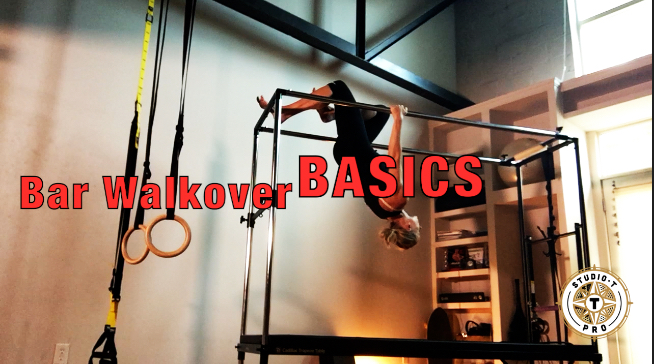
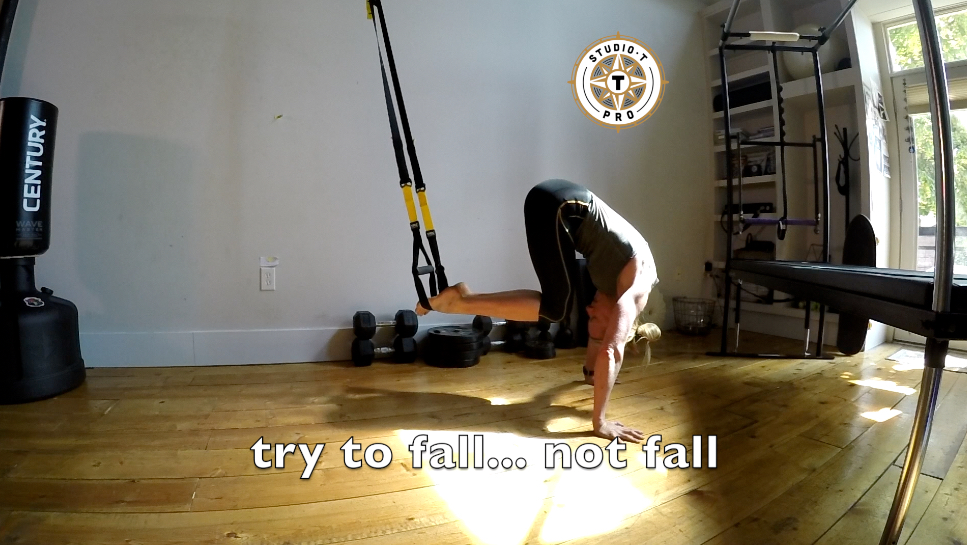
STPro is rolling out Cirque style bar training tips. The beginning Bar Trick is a simple walkover to handstand line hold. This trick on the parallel bars trains for the perfect handstand line – and is an amazing cross train for all athletes. And it is a lot easier than it looks – the trick is trying it slowly a couple times – and starting with the walkover instead of a tuck jump or lever up.
The biggest trick of all – stay focused and have fun. Don’t overthink it – and give yourself several tries over a couple days until your body gets the hang of it.
The second Basic Bar is a bent arm hold to pike pullup. Here are some most useful talking points that are make or break for really getting the hang of this move – and all this crazy bar stuff.
These two moves tend to keep folks busy for awhile. More to follow from STPro in a longer post once the full video series evolves into a longer flow – that ends in the full front and back levers!
For Don. Dedicated to the doers, makers & shapers.
Bad Form Happens. Your Body Needs a Backup Plan. Martial Arts & TRX deep core moves – for when you’re in it deep.
Actually, there is no such thing as “bad” form. There are options. Some work better than others given the circumstance. In classic American style weight training, we can get hung up on the lumbar arch form. In Pilates can get hung up on “neutral” spine form. It’s a healthy obsession because it works in certain situations. (These are training forms based on theory for targeting optimal strength for one spine shape in the thoraco-pelvic canister.) But we tend to do them to death, so this “archy” pattern gets written into deep muscle memory… and sometimes we can apply that “optimal” form in real life. Sometimes.
Patterns used in real life are much complex than these “stiff” forms – and lack of training alternate “shapes” for the thoraco-pelvic canister ($200 word for the torso) can leave us unprepared. And everything suffers from overall athletic capability, to balance & coordination and especially – survival skills in fighting, falling and crashing. In the Air Force there is an acronym for real life: SNAFU. Situation Normal, All F’d Up.
A ship in the harbor is safe but that is not what ships were built for – Donald Kendall, Chm. PepsiCo
Ukemi avoids Face Plants
Will he make it?
UltraRob Crash – Palmer Park, CO
All solid crash patterns are Ukemi
Ukemi – Aikido Romo Dojo
STPro’s mission is to share professional level training online to enrich the lives and health of people who are self-reliant, enjoy athletics and are engaged in maintaining a healthy and even Epic lifestyle. In this article, STPro is sharing one of the most common themes that occur in work at the location in Denver, CO. This article works in two parts: first, it covers the knowledge that has been client tested and had the biggest impact on improving athletic conditioning. It shares what seems to resonate with engaged and self-reliant types who can apply this themselves to improve their overall training quality. Second, it covers how to execute the moves to achieve results. So without further adieu, let’s address the big burning question… why does this matter?
STPro Tech Essentials
Answering the great burning question…
Why am I doing this?
Use only that which works and take it from any place you can find it – Bruce Lee – Tao of Jeet KuneDo
The Good Biomechanics of “Bad Form”
For athletic cross-training in weight lifting forms, we train back extensors and gluts holding the lumbar arch – and forcing it if necessary. This is considered “good form” and is safe and effective strength training for prime movers. And fitness trends and common personal trainers tend to overtrain the lumbar in stiff extension with even more hip thrusts and kettlebell swings. It’s easy to teach, easy to do and popular. But what about training strength for when we are not in a routine weight lifting form and use lumbar flexion to execute real life movements?
Real Life Good Forms -In the Weight Room, These Are All “Bad Form”
Lumbar Flexion
Lumbar Flexion
Lumbar Flexion
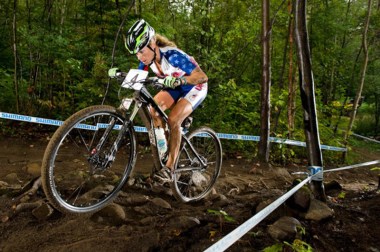
Real life is not the weight room. Real life is fast and dynamic. Unless you’re an Olympic sprinter on a smooth flat track, holding a perfect line, for athletics we squat, lunge, pull, heave and crawl with a “butt wink” or lumbar flexion. “Butt wink” is rounding the lumbar in a squat and for weight lifting is generally considered “bad form”. Lumbar flexion is when you squat with your tailbone tucked – and the lumbar gets long. Like going to the bathroom in the woods. It also occurs in varying degrees in dynamic power movements like the mountain biker above in the high speed turn – if he forced a lumbar arch in that turn for optimal alignment in his thoraco-pelvic canister (aka theory of optimal strength), he would lose balance and crash. And in the army crawl, one leg is in deep bend and power push, if the lumbar stayed strictly in a stiff arch, he will torsion the hip bones – probably at the SI joint and right up into the lumbar. Ouch.
So No. We can’t we just try to do everything in this wonderful “neutral” spine. In the real world it won’t work. In the real world, we use strategies for executing power movements. Some use a round back strategy (lifting with a “butt wink”), others use a flat arch/neutral back and some use both. The arch back/neutral spine is theoretically sound – but in practice, studies are not conclusive. OSHA tested factory workers with varying strategies for lifting hoping to map specific strategies to lumbar injury. Their findings? Nothing. People devised all types of lifting strategies – many of which would be considered “bad form”… and they did them for years and were successful. Source for this study and review of human load bearing form strategies: the textbook Kinesiology of the Musculoskeletal System, Foundations for Rehabilitation, 2nd Edition, Donald A. Neumann, PT, PhD, FAPTA.
“Bad Form” Deadlift or Power Pull?
Big air butt wink
So are we all supposed to start training loaded squats in deep flexion? Based on the theory of the hydraulic cylinder of the thoraco-pelvic canister, which loads us to be the strongest in extension (neutral spine or athletic arch), Western experts say No. They don’t know, so they cover their, uh, well they err on the side of caution and refer to theory of the biomechanics of the optimal strength pattern for the thoraco-pelvic canister. But in real life, we don’t move like robots. We go into power flexion in athletics because the moves require it – in athletics, we can’t balance in momentum with a forced training form. Theory does us very little when we’re flying…
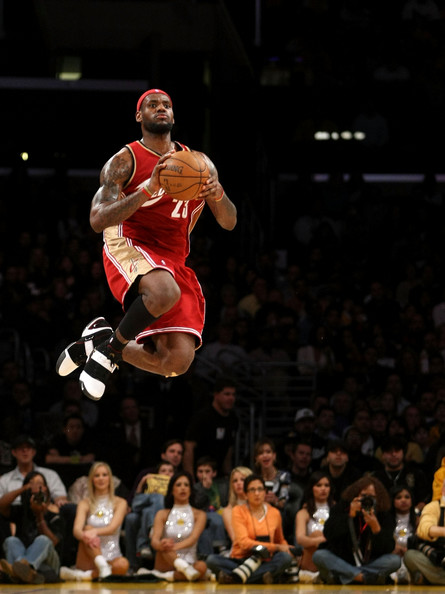
Lebron James uses core power in flight – it’s a crunch form in space – no forced arch is necessary for height and control in jumping. Our bodies have many ways to generate power. We use the strategy that suits the moves we need to make.
This following story helps to highlight the difference in the type of training needed for true athletics and in general, a healthy body: This is taken from a mountain biking tutorial on technique. Commonly done in every field of life, we interview experts on their technique hoping to find that elusive secret tip. The interviewer in this story has two expert competitive mountain bike riders share their tips on banking high speed downhill turns. Strength alone will not get you through this. It requires skill, focus, coordination, practice etc etc. The interviewer is not a rider. But, everyone’s an expert (ha ha), so he tries instead to analyze how to bank a fast mountain bike turn. In the interview (link below) it does get a bit painful as he’s trying to sound a bit expert at something he doesn’t do… but stay with me – because this really makes the point of this post.
Our expert Jill shares some tips with the interviewer about keeping weight in the gluts on a high speed turn. This is just solid advice for young bikers – a common enough tip and a common mistake – gotta keep the weight *back* to avoid faceplanting. Not picking up on this classic tip or understanding dynamic movement (and apparently gravitational force), the interviewer says “better hit the weight room, ha ha“. Good luck with that strategy. You can’t deadlift your way through a high speed turn. Some things require skill and control. It is exactly this common lack of understanding that inspired this post. Moves to train yourself for skill and control are an essential part of an athlete’s training. Moves that encourage a healthy and integrated kinetic chain build a body that is dynamic, can heal itself and maintain function for a long, happy and Epic life.
Below is an example of Jill Kintner’s form for banking high speed turns… she is in a skillfully balanced loaded power flexion – weight back in the gluts to avoid going over the bars. At 3mns we finally get to see Jill’s form as she banks a super sweet turn for the camera. This is a good strategy because this will keep weight in the gluts and also “in the core”. This form allows her to engage the deep low abs and obliques that control her hips right around the body’s center of gravity (meaning no stiff arch using spinal erectors substituting to stabilize). Related biomechanics are the strategy boxers use in keeping a chin tuck – when the chin cocks up the back goes into extension and the lumber can arch – meaning stiff – and the human body doesn’t take a punch from a stiff spine. It goes boom. Timber!
In other words, the idea of “better hit the weight room” has led to isolating essential athletic and functional movements to an isolated “core day” as if it is an option. And over-training of forced arch forms can impede total body health, creep into sports and ruin dynamic flexibility and coordination, and finally, when the stiffness pattern sets into deep motor control patterns for movement, the lumbar usually takes the hit. We are working bone on bone. And then usually a shoulder goes out too. It’s all connected in one kinetic chain. Physics. It’s a bear.
There Is More to Life than a Pelvic Thrust: Too Much Kettlebell & Donkey Kicks Train a Pattern for the Spine to HyperExtend to Access Glut Drive – Train Stiff & Execute Stiff = Lose Balance, Fall Hard and Go Boom
Theory
Practice
So when we lack sufficient high intensity practice training in forms we actually use in motion, we begin to lose strength throughout the entire kinetic chain. This is nicknamed “leakage”- and is generally compensated for by using ligaments and bones to do work they are not designed to do. And we get hurt. And then for sports rehab, using theory taught by academics, too often the Physical Therapist trains us only in “neutral spine” again. And we have more back problems. Sound circular? It is.
How to Guarantee You Will Need STPro Rehab – Do Everything in Rigid “Good Form” of Neutral Arch Spine
This slideshow requires JavaScript.
The coolest thing about the second graphic is the blue arrow indicating to jump forward to land on the object. Stop and think about that a moment. It gives the illusion of technical precision where there is none. We should have figured out how to jump on a box when we were 8 years old.
What we do with our time is valuable. Strength training is important. V02Max training is important. But our training should also be helping our bodies to move better, function efficiently and master gravity with coordination skills. So, Let’s Go Boldly where no Weight Room Trainer Dares to Tread…
Not Afraid to Go In There
Nothing opens up the mind like a punch in the face. Martial Artists have a couple thousand years of wisdom and the experience to ignore Western academic kerfuffling and overemphasis on one-off-productized-anectodtal-research-study-hopping when it comes to training.
Not every culture is so hung up on neutral spine for strength training. Both martial arts and gymnastics disciplines require mastery of balance in high momentum situations, controlled falling and precision landings. So, martial arts and calisthenics are a great place to look for safe and effective lumbar flexion moves for athletics, balance training and a healthy back.
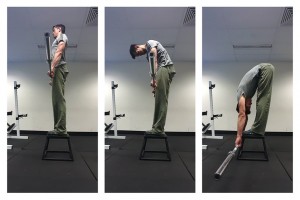
In an extreme move, Bruce Lee deliberately trained the lumbar in a huge, deep flexion move called a Jefferson Curl. This is an advanced gymnastics training move. It is about as “bad form” as it gets in the Western weight room setting. It violates all the “neutral spine” and arch training theories and is typically done with a 45lb bar (or more for the competitors). Bruce Lee often backed off the weight and went for total body muscle activation instead, he called it “tension”. Bruce was a little guy, but he could knock a 180lb guy off stage using on a 2-inch punch range. Source: Bruce Lee, The Art of Expressing the Human Body on amazon – life changing
Bruce Lee’s style of training included what is technically called “loaded flexion” – and if you really want to send a Western Academics into a tizzie – use that phrase and wait while the “experts” argue amongst themselves, show many charts and diagrams of anatomy… and still provide us with no answers. Ever notice that medicine, including sports medicine, refers to itself as a “practice”?
Studies and statistics often leave us with inconclusive guidance. STPro should know – STPro is, by training, a statistician. And by experience: A Skeptic.
Here is a demo of Bruce Lee’s Jefferson Curl. No generic ACE certified personal trainer would get near this. In the image below, it is being demonstrated by a master at Elements Fitness & Martial Arts in Australia – who learned it from Olympic Gymnastics coach Christopher Sommers (Gymnasticsbodies.com). It has many safety prerequisites, especially, long hamstring length making it dangerous for many athletes and bodies in general.
— Image used without permission — But here is the link: From a Great Site Elements Fitness & Martial Arts — will leave this up unless they take issue. This is a cool site and the trainers share wisdom and insights on probably an athlete’s greatest challenge — no it’s not winning — it’s flexibility (ugh!).
This post won’t cover the Jefferson Curl – STPro will present more familiar forms that achieve similar results. These more familiar forms are Low Risk – High Return. STPro would put the Jefferson Curl in High Risk – Moderate Return. Unless you are working Olympic Rings – in which case – you take the risk and just do it because coach says so.
So, now let’s pause to test ourselves…
Mastery: Test Yourself
When in real action, it’s wise to stick with our go-to strategies for playing our sport. But in training, it’s useful to bring awareness to the fundamentals and evaluate what we may do or change to make ourselves better. Following the training style of the great Chuck Noll (Steelers Coaching Legend) – Do The Essentials Better Than Anyone Else. And to test essentials, simple is better. Using a wall and gravity, check in on your core control – if you can land this soft, then the core is controlling the movement against gravity and the lumbar can handle loaded flexion (the load is your body weight plus acceleration force, in physics F=MA).
From Parkour, an intense urban style of obstacle course running based on military tactics… try a Soft Depth Drop. How is your landing? Were you quiet and ready to move into action – or clunky and falling backwards? (Unless you’re in the paint trying to win an Academy Award from the refs, ha ha!)
What about stability in coordinated in action? How good are you at tug of war – does your back hurt every time the rope jerks? Can you take a punch? Can you army crawl for 10 yards? Play defense in football? Could you tackle a thief?
Be Prepared to Go In There
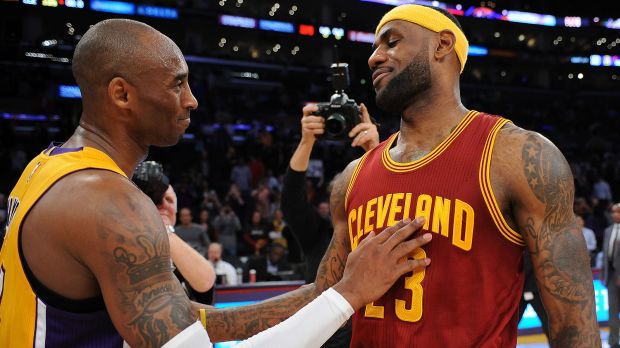
But wait, what about Pro athletes, what do they do? Yes. Their training is heavy on core and includes lumbar flexion under bodyweight loads. LeBron James does Pilates because it helps train landing mechanics of the core to land “soft” – in a round lumbar if he needs to depending on the situation – which prevents injury, more effectively captures ground force reaction and sets him up to spring forward on the court.
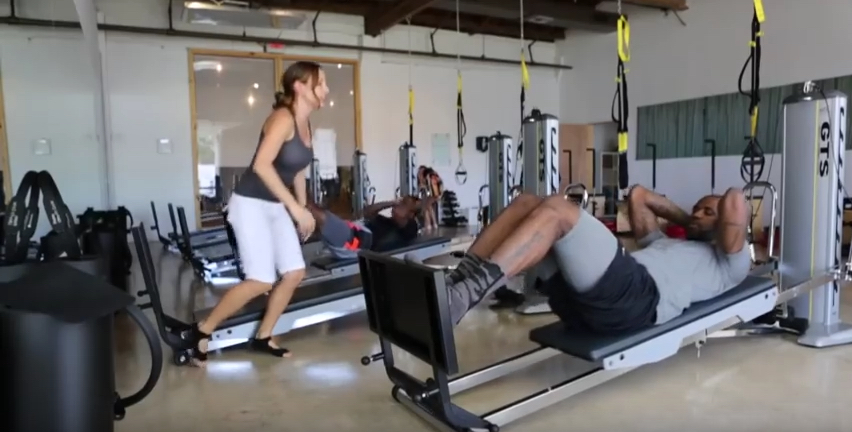
Kobe Bryant and LeBron James. Basketball players train the core for smooth, powerful jumping and landing patterns using Pilates. TRX and Bodyweight versions of these moves are presented below.
STPro trains both LeBron James and Antonio Brown’s (WR Steelers) routines in the studio – but they are outside the scope of a blog post and require equipment. But there are closely related moves that everyone can do without the fancy equipment. These are presented below and use only a mat and a TRX. When trained in the right form, they are highly effective.
Less Talk, More Action
The Moves:
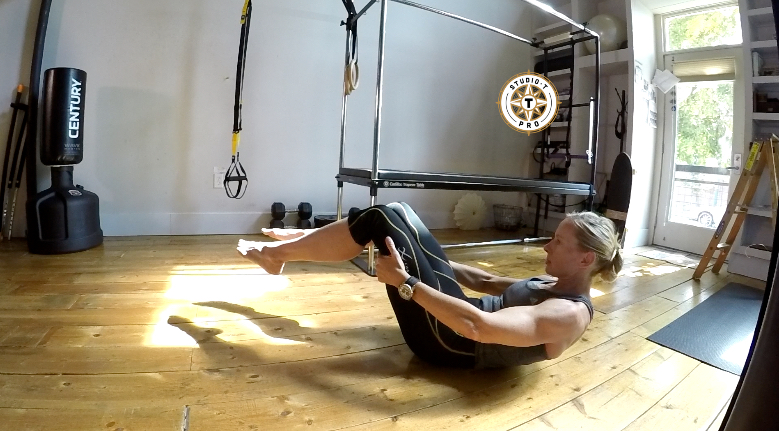
Test Yourself – Boat Roll
Hollow Abs with Michael Phelps Style Flutter Kicks
TRX Atomic Balance Pike
Explosive Tuck-Ups
TRX Atomic Balance Crunch
And just in case your back-up plan… needs a back-up plan. Focus on the Essentials – do the essentials better than anyone else…
What to Do if Your Durn Back Feels Stuck:
LeBron James Oblique Hold (upper back)
Training Trick Lumbar Release (lower back)
Sets & Reps
Can do these daily. Test yourself and see where you are now. Use the sequence – this will test your skill with all muscles activated (your best effort, like when you’re in the zone). Time how long you can hold the form and start there. Ideally, able to do a 20mn routine of all these moves – in sequence – with 1 set of Boat Roll (warmup) and 3 sets of 2-5. Reps here is time under tension – aim for 48 secs to 60 secs. 4 moves – 1mn, 3 rounds = 12mns. Add warmup and recovery breaks – about 20mns total. The Boat Roll, Tuck-Ups and TRX Atomic Balance crunch pair well worked into a weight training session that includes Pulling (Rows) and Deadlifts. Try it – email STPro if these two moves makes you stronger in pulling.
Working these with integrity will bring immediate results – but most noticeable over the course of a year: increased balance, increased control in momentum, hopefully a happy lumbar, improved running form, increased jump height, and maybe (depending on your current core strength) increased glut and back strength (meaning – throw a few more plates on the bar).
If you currently have disc issues, these moves are contraindicated. As soon as the disc heals, you need to rebuild core control and strength with these moves as a priority. But during recovery, it is safest to hit the core with push-ups and planks – this is only effective with the right muscle activation. Push-up Mechanics for Engineers – It’s All About Muscle Activation
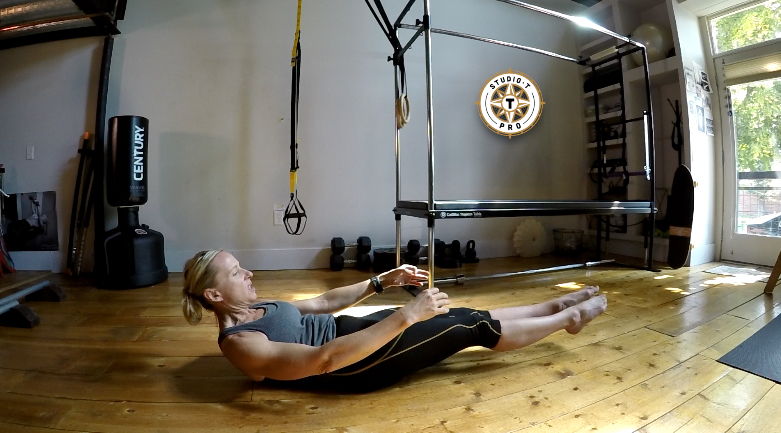
Test Yourself – Boat Roll
STPro teaches the Boat Roll using arms and legs. In real life, you may be hanging onto something for dear life. Tuck the tailbone and roll with it. Embrace the Suck and Live to fight another day.
BOAT ROLL
Release the lumbar arch stiffness by aiming tailbone down the back side of the legs
Contract abs only – do this all from abs – this uses reciprocal inhibition – meaning lumbar just stabilizes – suspend your torso from your abs only
If you’re miserable in the abs, you got the move. While working the set, STPro deliberately nags and asks people if they can feel the difference in muscle engagement from the lumbar to the abs. If they can’t talk and answer the question, they are doing it right. And if they are too focused to even give a look up (trainers live for the Stink Eye), then that is perfect! This is a control power roll. Very focused.
Breathing matters here – exhale deeply from low belly (that air pocket at the bottom of the diaphragm blocks the move) – breathe into the upper back – this is very athletic – we use complex breathing patterns in real life
THIS MOVE IS A KEEPER if you feel tight in squatting or stiff in running. We use this function of the core all the time, in everything. Great as a release for lumbar stiffness after “Back Day” or from pounding on the court… or just feeling stiff.
Hollow Ab Flutter Kicks Like Michael Phelps
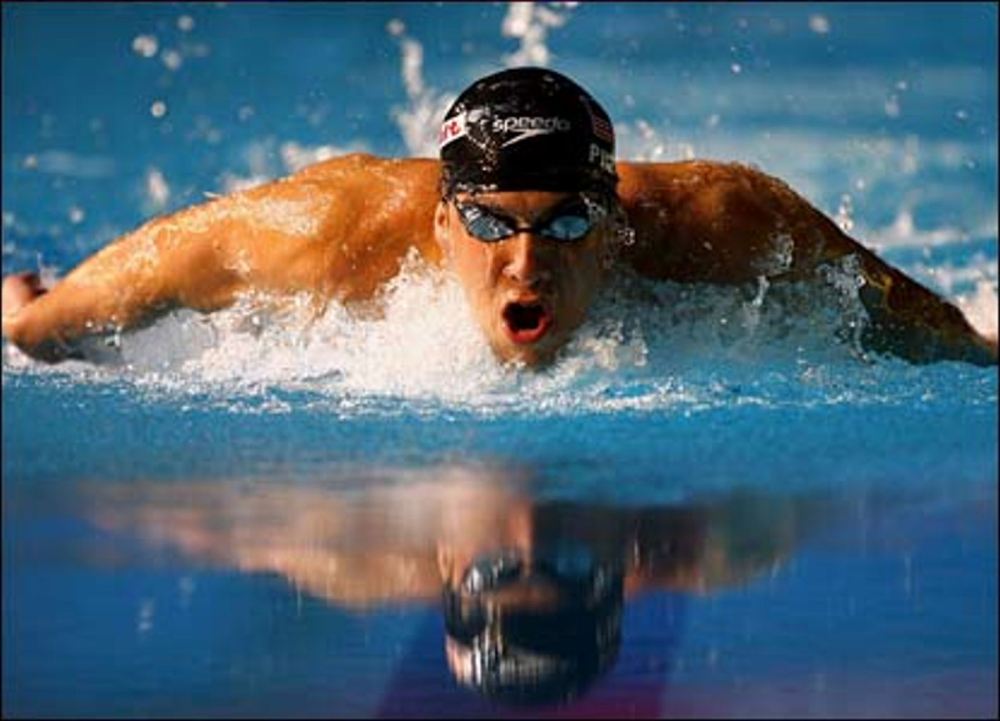
In the butterfly stroke, Michael Phelps holds his line using a small coordinated flutter kick to support the body while the arms raise forward. In this picture, that kick would actually come about right now. If he arched at this point in the kick, he would drag or sink. The following moves train this deep core control – and taking it from the floor to the TRX simulates the same athletic angle to gravity. In other words, get the butt off the ground, like real life, give the core a chance to train at realistic angles to gravity.
No, STPro is not suggesting simple mindless leg lifts and flutters on the beach so you can get overdeveloped abs that scare small children. This familiar form is often used for ab puffing – and even done wrong will accomplish some puff. But here’s the thing, in terms of core control – “Beach Abs” demos of this usually come with much arching, wheezing, chin jutting, shoulder jutting, exhausted sounding inefficient non-athletic breathing patterns and lumbar misery. And a tan. From an athletic perspective, let’s get the most out of the form. Your abs will look just fine from the center of the podium holding your medal.
HOLLOW AB FLUTTER KICKS
Aim tailbone down the backsides of the legs – this is called Posterior Pelvic Tilt (PPT) – it may feel like a butt tuck – but it’s just a bit of a tilt – almost tucking – but not a full tuck – just a slight tilt to get out of a stiff arch. Force that PPT like it’s the end of the world
Lock the form squeezing the gluts – not too much, not too little. The gluts and deep low abs work as a force couple to prevent rotation around the joint… meaning that strong desire to arch into extension here (arching in this makes a stiff lever vs gravity using bone on bone, aka, training for injury). Lock the form to hold with just enough glut power to force that line. This force lock with gluts and low abs is your working “sweet spot”. Well, it doesn’t feel sweet when you find it, it actually feels miserable. Own that misery – that is your body training to hold a line against rotational torque forces. Here, we are training to master gravity. Not let gravity master us. (A German folk expression: Squeeze your *ss and get through it.)
The flutters are very small movements in legs – like an inch, with control – the goal is perturbing the attachments on the lumbar – big moves are a cheat, that’s taking a break and using momentum instead of stabilizing
Test the form while working it – put fingers inside of each hip bone – if can feel the contraction fire stiff underneath the fingers – that is the core in training to hold and drive power. This test in practice seems to be the most effective: awareness and focus on what you are trying to train. Once folks get this, STPro can see the light bulb turn on – they “found” those deep stabilizers. They still look miserable – but now the misery has a purpose.
If you’re doing it right it will be almost impossible by 48 seconds… aim for a set 60 seconds. Only 3 rounds of 60 seconds MAX per workout. These deep low ab muscles are used in every athletic action. Overdoing this before heavy lifts or activity can actually cause injury by lack of core control from exhausted stabilizers – unless you are advanced and know what you’re getting into, then by all means go for it.
Breathing – you can’t take deep belly breaths – not if the low abs are firing – the low abs are locking that tilt (PPT). That locked PPT is called the “hollow ab” because the low abs suck up and in. It does not feel hollow, however. It feels like hell. Stay calm. Breath into upper lungs, especially the upper back. This is excellent training for real type of breathing used in sports and real life. This upper lung breathing also opens up lung capacity – great for racing and Vo2 Max training. Also, excellent for defeating the effect of aging on atrophied use of lung capacity.
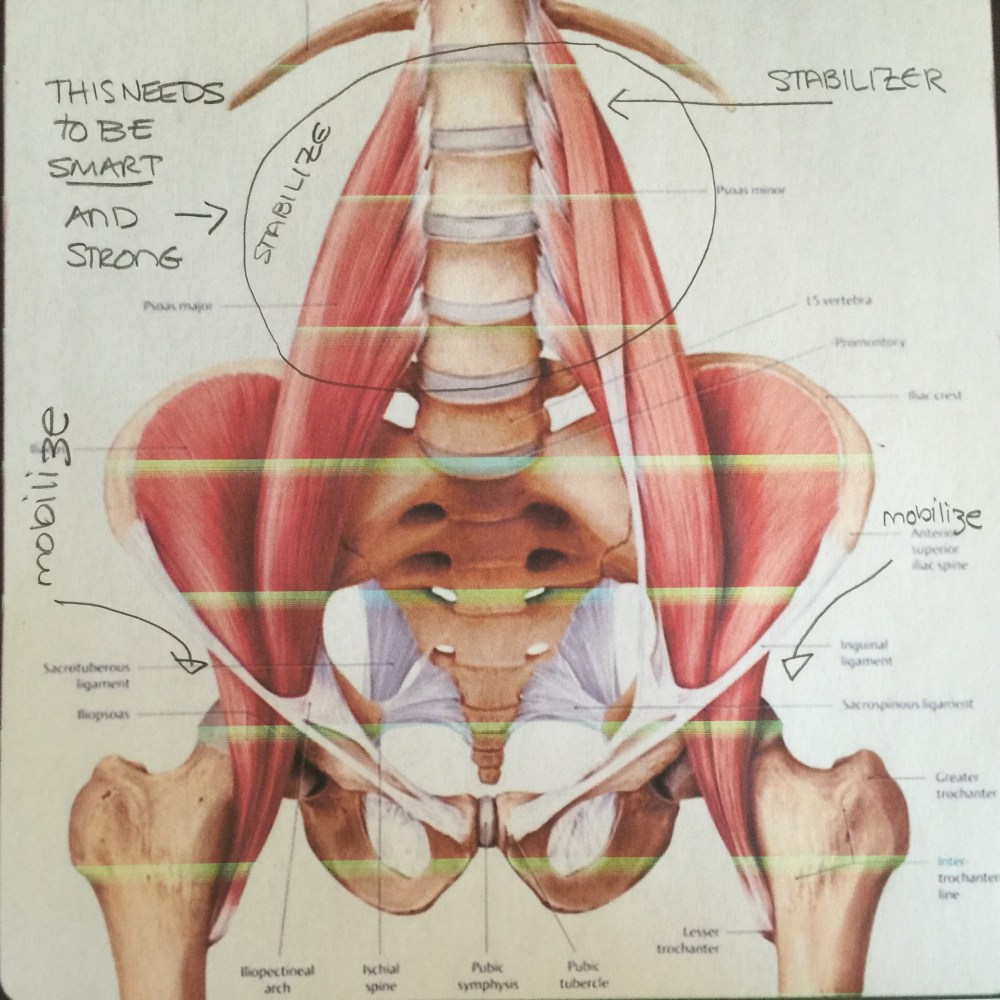
The STPro trainer please don’t quit speech: These things really stink, but there is a method to the madness. What we are trying to accomplish is to train the upper hip flexors that attach on the lumbar to stabilize – while we train the bottom of the hip flexors to mobilize. (Like setting the shocks for the appropriate anticipated instability.) Making big leg swings defeats the purpose. It doesn’t take that much for the hip flexor to lift the petty weight of the leg – it takes a lot of control for the upper hip flexors to stabilize the lumbar while the legs move. This style of training is the secret sauce. As Antonio Brown says, “Don’t want to skip the little muscles and get out of whack.”
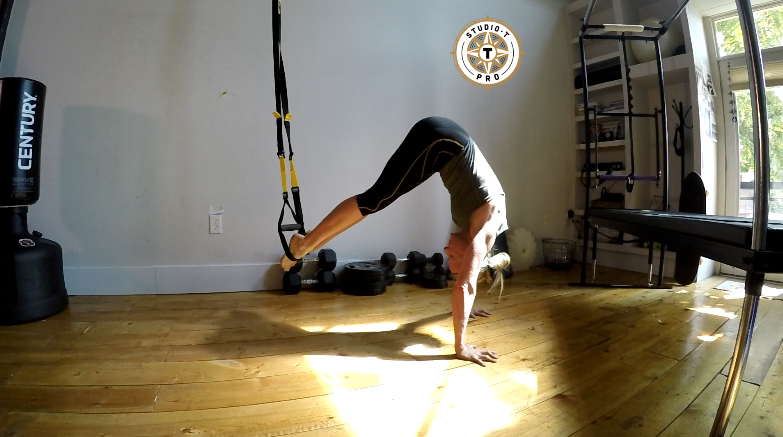
TRX Atomic Pike with Hold
STPro trains the TRX Atomic Pike like a balance game. Like real action – holding a line with bumps and action. Allowing *no arch* in the TRX Atomic Pike forces deep internal stabilizers to fire. The spine holds the shape while arms and legs are busy doing other things. The “little guys” (internal obliques, deep low abs, external obliques and even smaller stabilizers on the spine and those tiny attachments from the hip flexors) are the key to holding a functional power shape. Arching and hyperextending = face plant. It’s really gonna hurt when that bike lands on you.
TRX ATOMIC BALANCE PIKE
Try to almost vault over shoulders – hold the balance from deep low abs – pay attention to how high can you go before you fall and note any weaknesses in abs (train your range)
Press hard into straps for activation internal obliques hold the pelvic tilt
Press floor away strongly through arms
Stay in any “shakes” – those are core stabilizers doing their mini repetitions of balance training, like little mini bicep curls for stabilizers
In practice, while folks are doing the move, STPro has them visualize a string on their lumbar that is pulling them up. See how high you can go – the higher you go, the deeper the core. Make sure to exhale for more height – this empties the bottom of the diaphragm and gets that air pocket out of the way.
Come down one rep before failing – this protects shoulder joint
Training Tip – Go Slow or You Don’t Own the Move
You’ll see people grunting and heaving and banging these things out real sloppy to get them over with – bad reps on this won’t do much except maybe some vanity puff in the abs.
For the Benefit… Go Where You’re Weak and Out of Balance and Hang Out There – Give the Body a Chance to Run Some Slow Practice Reps to Train Efficiency. This will translate directly into increased control in sports, increased overall balance and a very happy lumbar & SI joint.
Precautions for Atomic Pikes. Avoid if: Hamstrings are too stiff to straighten legs and pike. To test hamstring length: sit with straight back against wall with two spots touching- 1) sacrum (bony spine part in between the SI dimples) and 2) the bony spine part between the shoulder blades on the wall (this is your natural standing back). Sit like this with legs out in front and long. If you have to bend knees or slump to straighten the legs, then hamstrings aren’t at a 90dg length needed for sports. This is called the L-Sit test. No need to pay STPro $100/hr to sit next to a wall when you can do this yourself. With short hamstrings, all of these essential forms will be limited and lumbar is at risk in not only these moves, but in all athletics. The hamstrings pull on the lumbar and can do damage.
Explosive Tuck Ups
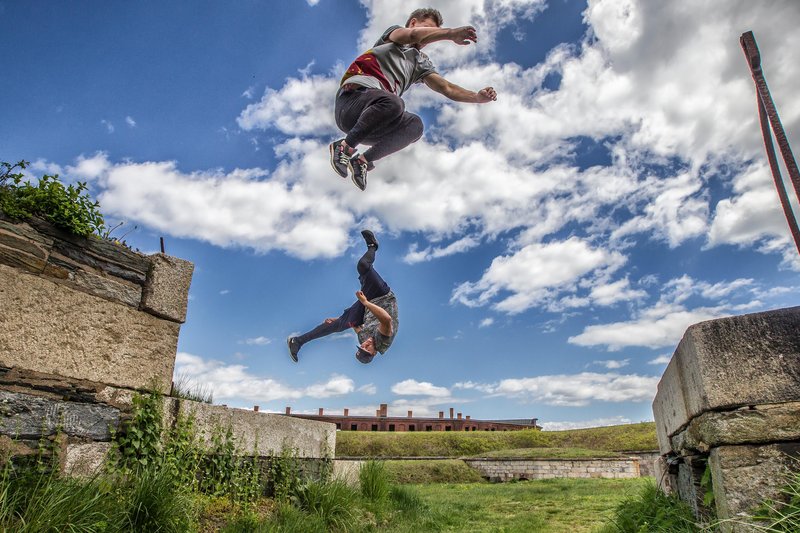
May 13, 2015. Red Bull Athletes and Professional Freerunners Jason Paul and Pavel Petkuns – the background is a Ukemi fall form and foreground a tuck-jump form. Patterns trained and stored deep in muscle memory execute with lighting speed. And no overthinking. Which is good, because there is no time to think. Just time to do.
EXPLOSIVE HOLLOW AB HOLD TUCK-UPS
Remember the roll-down with bent arms from the first exercise? That move is in this sequence to activate the deep low abs and release the lumbar stiffness (if there is any) for tuck-ups
Make this controlled and precise
Snap at top with an full exhale
Make it explosive
Shoot legs back out to the full Hollow Abs from the Flutter Kicks move above – do not allow back to arch – fight the arch – remember that tilt? Force that PPT tilt like it is the end of the world
STPro teaches this in sequence – just doing these “cold” without the Boat Roll or another type of lumbar release can make this feel “jerky” or stiff. This move should take much effort – and done smoothly. Think jump shot takeoff. Or backflip. Finesse it. Exert as much as necessary, as little as possible.
Grand Finale – TRX Atomic Balance Crunch
Big air butt wink
Whatever your line is… train to hold it.
TRX ATOMIC BALANCE CRUNCH
Round tailbone all the way in and hold using control from the front side
See if can get higher in the roll – by lifting through abs below the belly button – use all abs and shoulders to control this move – this is where true athletic benefit is – training the low to stabilize in tandem with the shoulder girdle (think upper obliques & serratus)
Push the floor away – really keep pushing the floor away – we’re protracting shoulders through the serratus (the boxer’s muscle) here – stay in that push, no breaks – breaking that protraction risks shoulder injury – push like you wanna vault into a roll, but don’t… stay in that shaky instability
Control the roll back to the flat back position – release all the way into proper push-up form, keep pushing the floor away – no shoulder sagging and no sagging in lumbar – really press feet into straps, this feet pressing bit activates quad and internal obliques – think smooth jump shot
This move tends to be everyone’s favorite. STPro prefers this to core on a fitball or from plank because of the power through the quads and the lower obliques – and the shoulder press strength benefits. This is a very productive move. Short quality sets more often in the week bring the biggest benefits – and can even improve extension and load bearing weight lifting forms – so it is possible to work smarter (from the core piece) and harder. BAM!
What to Do if Your Durn Back Feels Stuck:
LeBron James Oblique Hold (upper back)
Training Trick Lumbar Release (lower back)
Below, LeBron is holding a related form referred to as a “chest lift”. His upper trunk is being supported by the core, especially at the solar plexus (upper obliques – at the bottom of the sternum, our Solar Plexus). The trick is to roll in the ribs until the shoulder blades come off. Looks easy, but this thing is a bear.
LeBron James holding the chest lift form while jumping and landing. Just holding the chest lift doesn’t look like much – but it is painful and an ab burner – especially for men with well developed upper body mass – these pro players will hold that form and practice landing jumps with the abs and core in full activation mode. What’s really going on here is NMC or neuromuscular control training. In English – strength isn’t enough – jumps and landings are multi-joint complicated movements. Instead of nitpicking form and trying to get it – this allows the athlete to practice holding the line and working through landing mechanics. The body trains itself. The angle of the machine allows LeBron’s nervous system to fire repeated jumping patterns without incurring injury on bad landings. The key to this – hold a steady chest lift form firing core stabilizers the whole time – this trains for smooth execution in a real jump or landing. Plenty of great repeatable studies for jump mechanic improvements with this NMC stuff (neuromuscular control – not just theory – it can be tested and repeated by other trainers). STPro loves loves loves NMC because it works and allows people to train themselves. Nobody knows your body… like your body.
ESSENTIALS: RIB CAGE MOBILITY & UPPER OBLIQUE STRENGTH AT SOLAR PLEXUS
TRAINING TRICK: LUMBAR RELEASE
Our bodies function in realtime using neural patterns stored deep in muscle memory. These become the body’s go-tos. Training limited extension forms can overwrite other patterns and “creep in”. Solid training requires balanced strength – including lumbar power and glut drive in flexion (PPT).
A life spent making mistakes is more useful than a life spent doing nothing. – George Bernard Shaw
Pre-reqs 3 sets 1mn each of the above for STPro Series: CrashFit Happens(TM), Muay Thai Latte(TM), The Big Game Hunter(TM), Black, Gray & Scrappy Ops(TM)
“For me, I am driven by two main philosophies: know more today about the world than I knew yesterday and lessen the suffering of others. You'd be surprised how far that gets you.”
― Neil deGrasse Tyson





 — Image used without permission — But here is the link:






 STPro
STPro 