mtb cross-training

STPro

STPro Youtube Exercise Channel Reviews: Top 3 Picks


“The Dude Abides” – The Dude.  For everyday use – meaning – when you do your own thing.  As contrast with following the madness of crowds.  Image: The Big Lebowski
studiotpro_colorOnce STPro’s financial advisor asked a conversation starter question… So, What’s Your Favorite Investment?  After a brief pause, STPro’s answer was: Myself.  Luck may come and go, markets may come and go and business conditions may come and go.  But there is one thing one thing that must stay the course, maximize total return and last through retirement: physical health, strength, mental clarity and stamina.

Investments are graded on their balance sheet health and forward looking growth potential.  To realize returns over time, quality advice and disciplined self-management of resources are essential.  Following the madness of the markets and trendy too-good-to-be-true asset bubbles quickly leads to below average returns – or outright massive losses.  To pick any good investment, it is typical to apply a screen.  This weeds out the plethora of competing assets all vying for your investment.  And the same approach works well for exercise conditioning: weed out the low-grade advisors, pick a plan based on quality and grow your personal “net-worth” with disciplined practice and focus on building your assets over time.

Like the investment markets, Youtube has a plethora of “investment opportunities” for our time and effort.  In the early days, mostly established athletic institutions provided quality content based on their established training practices.  But these may lack the glitter and appeal of the false promises of the new generation of Youtube-Exer-tainment Industry.  With so many potential viewers and revenue generating opportunities, Youtube is now awash in a sea of “experts” with access to cool looking urban gyms with hip graffiti, hi-res digital cameras and the sound of banging weights in the background… And just like Wall Street, they may look the part and talk a pretty fancy line,  but keep in mind the saying on Wall Street: these guys are experts at playing with other people’s money.  And in the Youtube Exer-tainment world, these guys are experts at playing with other people’s health.  Your most vital and important asset.

Just like the investing field, popular may not always be profitable.  Research is essential to identify investment opportunities.  But research for quality channels is time-consuming and made more difficult by Youtube search rankings driving results by “popular opinion”.  In other words, increasingly, Youtube searches often reveal a bewildering array of splashy, attention getting ad-revenue generating Exer-tainment (exercise entertainment).

To weed through the madness, as with investments, STPro applies a screening criteria.

Quality Self-Investment Screening Criteria:

  • Verifiable and Appropriate Credentials
  • Builds Total Body Athleticism (not a vanity channel)
  • Athletic Focus on Health – Including Cross-Training for Body Balance
  • Demonstration Quality & Technical Precision
  • Integrity & Commitment to a Quality Brand Channel

After viewing thousands of hours of some pretty awesome – and some pretty lame channels, STPro recommends the following Top 3 Channels for athletes who are disciplined investors who would appreciate and benefit from quality exercise consultations.

In alphabetical order by brand name…


ATHLEAN-X(TM)


STPro recommends this channel for:  1. all athletes who weight lift for cross-training;  2. all rotational sports athletes, especially baseball and tennis as essential resource for rotational sports skill conditioning;  3. athletic individuals who do not play a sport but seek well-rounded, challenging training for health and physique.

Athlean-X(TM) Back Story:  Content created by Jeff Cavaliere MSPT, CSCS.  Jeff served as both the Head Physical Therapist and Assistant Strength Coach for the New York Mets during the National League East Championship 2006, 2007 and 2008 seasons. He is a Certified Strength and Conditioning Specialist by the National Strength and Conditioning Association (NSCA).

Advantages

Anatomy & Physiology Essentials:  Provides accurate, jargon free and expert discussion of common joint issues.  Essential knowledge for athletes in training.  Addresses common athletic questions and debunks Gym Myths along the way.

Breadth of Weight Training: It will be difficult to find a weight training move not covered with solid technical advice.  The challenge will be searching the channel to find the move.  This is covered below in Dis-Advantages.

Coverage of Popular Bodyweight Trends with Benefits, Training Progressions & Risks: The channel is inclusive of popular moves such as muscle-ups and levers.  Risk-reward for these moves are covered where appropriate.  Progressions are well-presented and creative in use of gym or home equipment.

Myth Busting:  This channel will directly challenge myths and bad training advice proponed in heavily commercialized channels.  Includes diet and supplement mythology.

Iron Graveyard:  Provides specific detail on updating and outdating some weight training moves that may cause harm.  Avoids too much detail – provides just enough so that athletes are able to manage their own training.

Bodyweight Programming:  The website offers calendar based, well-documented training programming.  STPro recommends this online programming to friends and family.  It provides well-balanced programming, requires no gym membership and is focused on total athletic health.  Further, the programming emphasizes getting out of the gym for healthy movement and in addition to two strength days, includes field days for essential high-intensity Vo2 Max training including  running drills or boxing or skipping rope etc.

(BTW, there is a “women’s channel” which STPro has not tested.  STPro recommends the ladies get a pull-up band assister thingy and do the man’s workout on Athlean-X(TM).  Why?  Because your bones and muscles run the same way.  So no excuses honey.  Put that pink dumbbell down and let’s see your deadlift.  STPro’s professional opinion of  Youtube’s plethora of “Chic Fitness” channels:  a sexist insult.  STPro varies the sets, reps and weight levels for women: but not the movements.  STPro in practice applies more variation in training program by bone structure, history of athletic training and goals than by gender.)

Disadvantages

Heavy Handed Almost Unbearable Marketing Schpeel is Aimed at Young Males Who Want to Get Huge:  In addition to the marketing style, all of the programming sets and reps cater to hypertrophy only.  For athletic goals, often training needs to focus on strength, endurance and skill over mass – so viewers/program users need to adjust their sets & reps on their own.   It seems that the more recent videos are  becoming more and more mainstream “gym fitness” and “get huge” and the already thick hype is getting thicker.  But STPro urges everyone to bear with it.   The quality is still there – so it is worth being patient with Athlean-X’s obnoxious marketing to realize they gotta make a buck too.

periodization

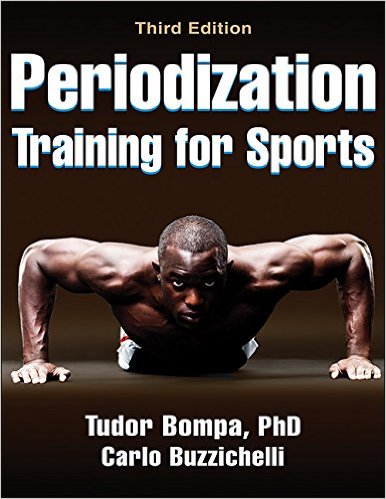
A companion resource for understanding periodization for athletic training and managing your own cycles of weight levels, sets and reps by goal: Periodization Training for Sports  Cover excerpt: “In this new edition of Periodization Training for Sports, Bompa teams with strength and conditioning expert Carlo Buzzichelli to demonstrate how to use periodized workouts to peak at optimal times by manipulating strength training variables through six training phases (anatomical adaptation, hypertrophy, maximum strength, conversion to specific strength, maintenance, and tapering) and integrating them with energy system training and nutrition strategies.”  A solid read for every person – not just competitive athletes and coaches.  A worthy investment in your best asset: Your Health.


Marketing Titles Make it Hard to Find the Right Training Tip: To drive view traffic for a youtube mainstream audience,  most of  the channel’s super great training tips are re-positioned from athletic goals into gym fitness goals of “doing more reps” and “getting huger”.  While these claims are certainly true, the origin of the training tips Jeff teaches is the field of athletic performance.  Those goals would be things such as running faster, hitting a ball further, resisting injury  and being really good at skill-based things.

But, it is what it is.  Everyone has to play the game to survive.  And, sadly, the biggest part of the American fitness market is vanity.  In the investment markets, this is a short-run return Las Vegas style of gambling: it may pay off big in the short run, but in the long run, only the house wins.  Or as the beloved character Dom Mazetti  puts it, “Win-timidation” over Skill.  You may look good – but when times get tough, you couldn’t fight your way out of a wet paper bag.  Or even run away very fast.


Fictional Gym Humor character Dom Mazetti with (real life athlete) Terence Crawford. Terence Crawford (born September 28, 1987) is the current  WBO junior welterweight  champion.  As of June 2016 he is ranked by The Ring as the world’s sixth best boxer. Crawford is a fast, hard-hitting, and highly technical fighter who is recognized for his ability to comfortably switch hit from orthodox to southpaw.  The following is satire.  It is politically incorrect, crude and includes profanity.  And it is hilarious.  It is a perfect metaphor for the mainstream fitness “goals” of youtube gym training.  STPRo trains extensively from martial arts and boxing disciplines and was stoked to discover this gem.  STPro is a Terence Crawford fan – fighting Southpaw requires mad skills!


But all marketing tactics aside, Jeff Cavalier is a true pro trainer at heart – he constantly repeats best practices and encourages thoughtful training – and in spite of the heavy-handed marketing, overuse of hyperactive bright red & yellow, too many confusing product packages named X-this and X-that, at the core, Jeff continues to maintain credibility in training techniques.  And listening to many of his videos over the years, there is much integrity at the heart of this channel.  It is worth digging in and making time to listen, watch and learn.  There are actually killer results make-or-break tips being conveyed underneath the marketing.  Unusual in this day of social media generated fluff.

The Channel

Athlean-X(TM) on youtube: https://www.youtube.com/user/JDCav24

Website:  http://www.athleanx.com

and STPro’s personal playlist of Athlean-X(TM) killer super-tweaks for weight room results for “Back Day”:  killer back day tweaks


RYAN FORD – PARKOUR EDU


Parkour is derived from an urban style of military tactical training.  It requires mental focus, skill, strength and total body fitness.  STPro recommends the Parkour training for all athletes – especially mountaineering, rock-climbing and board sports cross-training.   In addition, Parkour emphasizes hip mobility for skillful landings of soft jumps which is an excellent cross-training for total body health and physical capability. 

The training and skills emphasized in Parkour are essential foundational movement skills: running, jumping, pulling and problem solving.   If you train at STPro in Denver, you will be challenged with the outdoor obstacle course in the park across the street – this is really fundamental movement skill.  One lap through the course will quickly reveal the extent to which routinized, commercialized “fitness” training does not promote total body health.

Ryan Ford’s Parkour channel provides a go-to resource for testing your skills, mobility and true athleticism and capability – and it is structured to adapt to all levels.  Parkour trains for capability and problem solving.  In most of life’s situations, we can’t “bench press” our way out of things.

Ryan Ford Backstory:  Parkour Master Trainer and Athlete, Founder of Parkour EDU.  Ryan is from Golden, CO and graduated in 2009 from the University of Colorado at Boulder. Now known internationally as a top Parkour athlete and coach, Ryan started training parkour in 2004. Since then, he has performed around the world for organizations such as the U.S. Embassy, Cisco, Nokia, HP, BET, and K-Swiss. Additionally, Ryan has been featured by media giants such as the New Yorker, TIME, and ESPN. In 2006, he established the western hemisphere’s first formal parkour classes. Recently, Ryan has turned his gym, APEX Movement, into one of the world’s top parkour gyms, with 4 locations, an elite pro team, and a leading coaching certification. Ryan also has a renowned parkour training video series on YouTube called Demon Drills, which has over 3 million views and 20,000 subscribers. Thanks to his work on YouTube, he was invited into YouTube’s prestigious Next Trainer program and soon thereafter, joined the prominent FitFluential group as a fitness ambassador. Ryan is currently sponsored by Vivo Barefoot, Larkburger, and Illegal Pete’s.

Advantages

Problem Solving: Sticking with the investing analogy, like investing in the markets: Parkour involves risk.  Here’s the thing about risk: it is essential for kicking off neural processes that generate growth.  While risk tolerances and perceptions vary, the human body is wired to manage risk.  Perceived risk actually kicks off neural processes that create hormonal states that enhance performance, generate “flow-state” hormones and fire up the entire kinetic chain to perform.  Not convinced?  We can measure it – how to create all the really good drugs without a trip to the pharmacy:  Neurochemistry of Flow States

Parkour drives right into the heart of our deep survival processes to invite manageable risk.  Risk requires problem solving, and the human body loves problem solving.  The human body is an amazing mathematical genius.  We are wired to solve complex mathematical problems that not even the most sophisticated engineers cannot solve.  But there is a catch.  These processes require new challenges – and that is why solid programming requires constantly changing a workout routine.  The brain has to stay in the game.  The body is wired as an integrated unit with thinking, moving and executing.

Like an experienced and solid investment advisor, the Parkour community sees every challenge as an opportunity for growth.  And the moves they use are intuitively obvious: running, jumping, climbing and pulling yourself up and over objects.

Finally, mindless investing generally leads to loss of capital, deterioration of returns and deploying capital on high-risk/low-return opportunities.  In short – you go broke and hurt yourself.  You’re in the hole, maybe for good.  You can see this in group exercise classes, especially in the HIIT craze.  Seeking sheer vanity, folks are mindlessly wailing away at punching bags – in bad form, with no thoughtfulness.  It is not if, but when, they will become injured.

In contrast, STPro preaches the same mindful training and borrows extensively from the Parkour repertoire for training.  And for folks who don’t care for the the obstacle course (you can really scrape up knees and elbows ), STPro uses simple martial arts and boxing moves that involve coordination and targets.  Just a cross-punch and a roundhouse kick.  Think about it.  Control your body.  Then go take a lesson at a boxing academy – a real boxing academy.  Why? Because they will have you spar for real with somebody a lot better than you.  And nothing wakes up the mind, body and kinetic chain like a real punch in the face.  Or as Bruce Lee says, pretend that bag is going to kick you back.

When you’re choosing sides for kickball, are you gonna go with the biggest guy… or the skilled player?  Even the biggest defensive lineman is no good if he can’t read the offense and make plays.  Invest wisely in keeping a sharp mindfulness or your assets will decay.

Equipment Free: The Parkour movement is creative and ingenious at presenting healthy training that is equipment and gym-membership free.  No gym?  Too bad. No excuses!

Breadth of Training:  With an emphasis on athletic skill, the Parkour training covers all essential aspects of conditioning.  Because Parkour competitions are obstacle course based, they require full body integration, coordination and strength.  Their programming is fun and challenging – and working through the movement sequences will guarantee a totally fit body that is capable and ready for anything.

Adrenaline, Momentum, Mountain Sports & Military Fitness: The challenging demands of the Parkour movement training make this an excellent fit for extreme sports.  For the advanced lever training, depending on prior gymnastics and body weight experience, some digging around for breakdown progressions may be necessary — unless you can already crush a Dragon Flag.


Parkour training includes Ukemi, the art of falling, landing and crashing safely.  This is essential for extreme sport and service personnel.  From the talented Amos Rendao, a Must Watch for all STPro mountain bikers & service personnel – you have to work the core hard and use it in every training movement – no sloppy or robotic training.  Falling, crashing and surviving are all essential skills coordinated by the deep core – these are not optional “oh let’s do one core day” kind of a thing – unless you would like a short career and STPro’s sports rehab services.  Enough preaching, just watch Amos… (warning, this is witty, clever and involves a sense of humor about the sport of Parkour – and that comes in handy  after a public face plant under the lift, as you might as well laugh at yourself… because everyone else is.  Laugh and Live to fight another day.)

http://www.amosrendao.com
The roll is a foundational piece of the study of falling. Whenever you can possibly spread out the impact of a fall with some variation of a roll, it is usually the safest and lowest impact method.

(nitpicky note, STPro teaches a variation of this for momentum athletes that takes the arm plant out of the move – handy for 30mph or over crashes)


Disadvantages

Lack of Core Specific Training with Progressions: While it is true that if we are properly executing athletic forms, we shouldn’t need core specific training.  But in practice, a well-rounded training repertoire of core specific moves functional movement is often needed to balance out our movement patterns.  In some cases, spot-training weak core engagement areas can remedy and avoid use injuries.  While the Parkour training covers advanced core moves (Dragon Flag, Bar Front/Back Levers – WOW!), regressions and progressions to these are not detailed extensively.

Lack of Online Programming:  The online site is still underdevelopment and the channel does not offer sequencing and training routine planning.  Meanwhile, an excellent resource is Ryan Ford’s Book:  Parkour Strength Training: Overcome Obstacles for Fun and Fitness

Cover notes:

In Parkour Strength Training, you will learn how to:

  • Accelerate your athletic development with three fundamental bodyweight exercises
  • Promote the flexibility and mobility necessary for safe obstacle-based fitness
  • Prepare and condition your joints to avoid injuries
  • Train safely outdoors
  • Remedy the common faults and errors that plague parkour newcomers
  • Incorporate ground-based exercises, such as quadrupedal movement, bounding, and jumping into your workouts
  • Use low obstacles such as benches, handrails, and walls for full-body strength training
  • Fly over barriers using three basic vaults
  • Mount, traverse, and overcome head-high walls and bar structures
  • Master proper climb-up technique using many supplemental exercises
  • Design an effective strength training program
  • Combine skill-based drills and games to become a more well-rounded practitioner
  • Dominate obstacle courses


The Channel

The channel is Millenial oriented with heavy use of social media.  This is both good and bad in the sense that browsing for information can be as much about weeding through heavy promotional tactics as learning.  As above with Athlean-X(TM), we all have to play the game.  In this case, it is worth the time and effort.  And that said, Ryan Ford is approachable and responsive to social media inquiries and using these tools to build a genuine community – refreshing!

Youtube: Ryan Ford Demon Drills Channel

Links to every social media channel extant are available from the youtube page.

Ryan Ford’s Mission: to launch an online platform for Parkour training here:

website: http://signup.parkouredu.org/


TEE MAJOR FITNESS


STPro highly recommends this channel for active and retired service personnel, mountain sports and all adrenaline athletes – ESPECIALLY THE FUNCTIONAL SERIES.   This channel chooses the best overall fitness training from bodyweight to weight lifting.  Core training is integrated into every workout routine and emphasized frequently: this makes it an excellent program to train in injury prevention and also for injury rehabilitation.  This injury prevention aspect makes it a favorite for STPro’s work with service personnel and adrenaline sports athletes who are subject to high speed falls and management of heavy loads and momentum.  In addition, with its heavy demands on extension based movement and the shoulder girdle supported by an integrated core to avoid injury, STPro also likes this channel as cross-training for modern dance.

Tee Major Back Story:  Most recent career highlights, from his long and comprehensive resume of training…

In April of 2011, Tee decided to take his talents internationally. As part of Operation Iraqi Freedom, he served as a Personal Trainer to the United States Army on COB Adder in An Nasiriyah, Iraq. Although he was not directly fighting the war, the opportunity to serve the men and women of our armed forces in an austere environment was an invaluable experience.

Transient

2012 – Tee then served as a Military Group Fitness Instructor on an U.S. Air Force transit base as part of Operation Enduring Freedom. This base served as the main transit base for troops coming to and from the battlefield in Afghanistan. The base hosted over 3,000 troops, DOD personnel, and host country civilians. Tee was responsible for creating and implementing the group fitness programs and physical training (PT) for United States Navy, Marines, Army, Air Force, as well as transient troops from Mongolia, Croatia, Poland, Spain, France and other Allied Forces.

Currently, Tee serves as a Personal Trainer and Group Fitness Instructor in a state of the art, 89,000 square foot facility for the U.S. Navy in San Diego, California. He also provides online personal training and programs for thousands of people through http://store.teemajor.com.


Advantages

Best Practices: One sign of a great trainer: they give you the warm-up speech.  Tee Major emphasizes and provides detail on effective dynamic warm-ups before every workout.

Trains Multiple Goals: Tee Major training will build strength, power, skill, endurance, V02Max, functional: running, climbing, scrambling, rock climbing, pushing/pulling and build a robust kinetic chain.  Integration and focus on “front side” core training is emphasized and especially applicable for service personnel with extreme loads on the back in extension (heavy packs, heavy lifting etc).

Progressions & Self-Tests: Training progressions with performance testing, especially self-testing and awareness are essential tools for an athlete and maintaining a robust, healthy kinetic chain.  His website programming provides this planning as a resource including printable PDFs of beginner, intermediate and advanced movement progression mapping.  Truly best practices in training methods.

Depth: Broad range of advanced movements all requiring integrated, total body optimal functioning.  While our American culture has become sedentary and physical fitness levels are declining, the Tee Major programming is “old school” and sets an appropriate standard for health and fitness levels.

Creative Combinations of Power Moves: “Behind the scenes” the Tee Major programming is training all aspects of coordination, shoulder girdle integration, lumbar stability, core activation, lateral system strength and activation, kinetic chain integration, oblique strength, plyometric skill, hip mobility, muscle endurance, shoulder stability, front side core support, back side core support, raw strength, conditioning… enough already!  It is thorough programming!  But to achieve this long list of goals, rather than following commercialized “gym fitness” (ineffective robotic, simplified “one-off” vanity muscle “micro training”), the Tee Major program uses highly challenging and effective power moves such as his Dragon Walk and the Combat Crab Walk.  In other words, just do his moves in good form (don’t skip moves you don’t like, ha ha!) and you have a well-balanced training program.  You won’t see Dragon Walk and Combat Crab Walk in generic fitness training because, well (read in a whiny voice) “it’s too hard”.  Sadly, these two moves require kinetic chain integration and are literally essential foundational movement skills.

Weight Room: The programming includes the most effective classic weight room training exercises – generally focused on back strength.  STPro encourages weight room cross-training – but not the commercial emphasis on overtraining weight room only (people start moving like robots and the core is either not engaged or barely supporting movement — but you sure look “hot” with that herniated disc).  The Tee Major mix of raw athletic coordination with bodyweight and supporting weight training are a solid mix of programming for athleticism.

Style & Manner: Tee Major is a class act.  It is obvious he has extensive experience training athletes for intensive missions and service.  His website and presentation materials reflect his professionalism.

Disadvantages

That his comprehensive training style is not adopted by mainstream commercialized vanity gym fitness.  Especially for women.  The women in Tee Major’s military programs are really kicking ass, passing their exams and getting their act together to advance in the ranks.  Sadly, for expert trainers like Tee Major, the average American market for training is limited.  Most of these trainers have to cater to the national average sub-standard and sedentary American fitness level (a disaster) to make a living – and this dramatically reduces the type of content they can monetize.  That said, the Tee Major channel is high quality, well-rounded, has not compromised integrity for sales and contains plenty of advanced moves and training routine ideas.

The Channel

STPro’s Personal Favorite is the Tee Major Functional, especially#11.  This one goes up to 11… and includes the infamous Turkish Get Up, a lateral system move similar to side plank, and what he is getting at here is integrated shoulder, oblique and lateral system integration, stability and power.  Done in proper form, the benefits of this move are phenomenal.   Tee Major’s demo is excellent – and don’t be fooled at how he makes this look easy.

From the Functional Playlist on the Tee Major channel:  “What is Functional Training: Functional training helps provide you with the strength, stability, power, mobility, endurance and flexibility that you need to thrive as you move through your life and sports. You use basic functional movement patterns like pushing, pulling, hinging, squatting, rotating, carrying and gait patterns (walking and running) every day. Functional training utilizes exercises that improve your movement proficiency in these primary patterns to give you an edge and enhance your performance so you can achieve your goals safely and with good health.”


In short, Functional Training means it trains you to be really good at doing stuff, like winning races and hitting personal bests.  Functional Training is closely related to martial arts – and is especially powerful for resisting injury.  Thus, it is a powerful component of any athletic cross-training and overall kinetic chain integration and health.

Tee Major youtube:  The Most Excellent Tee Major Fitness Channel

Website: http://www.teemajor.com

Bodyweight Top 44 Website: Test Yourself against the Tee

STPro has purchased and tested all of Tee Major’s products except the fat-loss programming.  STPro doesn’t train in that area or have need for weight loss programming (weight gain yes – still searching for that secret magical protein supplement, just like everybody else, ha ha).  Note, that in Tee Major’s case, with a background training young military recruits from the current American generation, fat-loss is an issue.  Thus, his offerings include current measurement techniques and standards necessary for service personnel.  Also, he provides healthy athletic eating programming methods and meal plans.  The Facebook page has a community working on life transformation and clean-eating challenges – and is a positive, hard working group.


and finally…

Pissing Off the Paleo-Bacon-Doughnut Cult

 STPro Avoids – Beware Any Channel Teaching Crossfit

For the handful of crossfit hard-cores who are in great shape and know what they are doing – STPro recommends the Tee Major advanced training for Navy Seals.  If you have gotten this far and survived the programming at Crossfit, you are certainly excellent at managing your own training and have exceptional survival skills.  The Tee Major advanced circuits would be right up your alley and add core strength and shoulder girdle stability power prehab to your routine.  

So You Wannabe a Navy Seal… Or You Are a Navy Seal, from Tee Major, then you should be able to do 5 rounds of this no problem (don’t skip the 30yards Dragon Walk in good form).


But this is not for the average crossfit “athlete”.   Actually, most crossfit can’t teach a proper pull-up, much less a solid athletic and functional pull-up as demonstrated above.    Watching just an hour  of crossfit, STPro has literally seen at least 10 shoulder dislocations, hip and likely labral tears, hernias, rib crushing (from *resting* the bar on the rib cage because they don’t know/don’t teach how to dump the bar on a fail) and spinal injuries that deserve an immediate MRI for diagnosis.  Until crossfit, it was unusual for a rehab trainer to have the opportunity to watch injuries being recorded live.  What is astounding: these “live injuries” were designed to show off on social media.

After STPro had seen enough – it was time to set off to research the backgrounds of various franchise owners of these boxes.  This revealed the source of this misery and woe: crossfit trainers only need a weekend course for the franschise license.  A weekend course for Olympic Weight lifting?  It is no wonder the Powerlifting community is offended: and they should be.

The investment analogy works here as well.  There are apparently a handful of these boxes that are run by solid, accredited trainers.  Even if we assume their “WOD” or workout of the day meets the screening criteria of total body health, the research costs of finding these out makes it very time consuming, aka, an expensive investment where research fees eat up the returns.

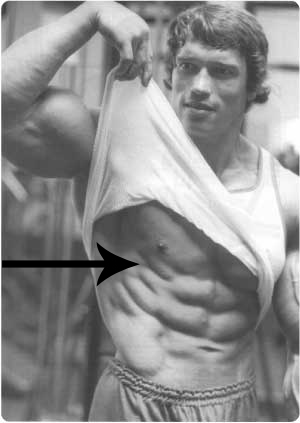
And finally, STPro lost all interest after meeting a crossfit “coach” who, when it came up in discussion, did not know what the Serratus Anterior muscle is.  For an athletic trainer: that is unthinkable and unforgivable.
images.duckduckgo.com2
Serratus Anterior

And this negligence is why Physical Therapists are seeing people come in droves with destroyed shoulders and permanent lumbar dysfunction.

Maybe you can fool the folks in the league office, but you cannot fool the STPro.

You Got a Date Wednesday Baby scene (edited) from The Big Lebowski


While this will (hopefully) upset the Paleo-Bacon-Doughnut cult groupies who are convinced crossfit invented sports, STPro’s watching the back mirror… just come and get me… bring your physics book and a whiteboard and let’s go.  STPro has degrees in math, engineering, a long list of certifications and will offer “special rates” for training crossfitters (bring cash: you will have to pay STPro to listen to any more incessant bragging about crossfit ).  You gotta date baby!


In health and friendship, may you Abide a long, healthy and fulfilling life.


Copyright Studio T, LLC 2016

Mastery, STPro

Horror Movies – Don’t Go In There! Why You Should Go In There


For Don. Dedicated to the doers, makers & shapers.

Bad Form Happens. Your Body Needs a Backup Plan.  Martial Arts & TRX deep core moves – for when you’re in it deep.

Actually, there is no such thing as “bad” form.  There are options.  Some work better than others given the circumstance.  In classic American style weight training, we can get hung up on the lumbar arch form.  In Pilates can get hung up on “neutral” spine form.  It’s a healthy obsession because it works in certain situations. (These are training forms based on theory  for targeting optimal strength for one spine shape in the thoraco-pelvic canister.)  But we tend to do them to death, so this “archy” pattern gets written into deep muscle memory… and sometimes we can apply that “optimal” form in real life.  Sometimes.

Patterns used in real life are much complex than these “stiff” forms – and lack of training alternate “shapes” for the thoraco-pelvic canister ($200 word for the torso) can leave us unprepared.  And everything suffers from overall athletic capability, to balance & coordination and especially – survival skills in fighting, falling and crashing.  In the Air Force there is an acronym for real life: SNAFU.  Situation Normal, All F’d Up.

A ship in the harbor is safe but that is not what ships were built for – Donald Kendall, Chm. PepsiCo


STPro’s mission is to share professional level training online to enrich the lives and health of people who are self-reliant, enjoy athletics and are engaged in maintaining a healthy and even Epic lifestyle.  In this article,  STPro is sharing one of the most common themes that occur in work at the location in Denver, CO.   This article works in two parts: first, it covers the knowledge that has been client tested and had the biggest impact on improving athletic conditioning.  It shares what seems to resonate with engaged and self-reliant types who can apply this themselves to improve their overall training quality.  Second, it covers how to execute the moves to achieve results.   So without further adieu, let’s address the big burning question… why does this matter?


STPro Tech Essentials

Answering the great burning question…

studiotpro_color

  Why am I doing this?

Use only that which works and take it from any place you can find it – Bruce Lee –  Tao of Jeet KuneDo


The Good Biomechanics of “Bad Form”


For athletic cross-training in weight lifting forms, we train back extensors and gluts holding the lumbar arch – and forcing it if necessary.  This is considered “good form” and is safe and effective strength training for prime movers.  And fitness trends and common personal trainers tend to overtrain the lumbar in stiff extension with even more hip thrusts and kettlebell swings.  It’s easy to teach, easy to do and popularBut what about training strength for when we are not in a routine weight lifting form and use lumbar flexion to execute real life movements?

Real Life Good Forms -In the Weight Room, These Are All “Bad Form”


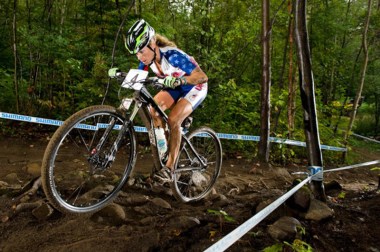
Real life is not the weight room.  Real life is fast and dynamic.  Unless you’re an Olympic sprinter on a smooth flat track, holding a perfect line, for athletics we squat, lunge, pull, heave and crawl with a “butt wink” or lumbar flexion.  “Butt wink” is rounding the lumbar in a squat and for weight lifting is generally considered “bad form”.  Lumbar flexion is when you squat with your tailbone tucked – and the lumbar gets long.   Like going to the bathroom in the woods.  It also occurs in varying degrees in dynamic power movements like the mountain biker above in the high speed turn – if he forced a lumbar arch in that turn for optimal alignment in his thoraco-pelvic canister (aka theory of optimal strength), he would lose balance and crash.   And in the army crawl, one leg is in deep bend and power push, if the lumbar stayed strictly in a stiff arch, he will torsion the hip bones – probably at the SI joint and right up into the lumbar. Ouch.

So No. We can’t we just try to do everything in this wonderful “neutral” spine.   In the real world it won’t work.  In the real world, we use strategies for executing power movements.  Some use a round back strategy (lifting with a “butt wink”), others use a flat arch/neutral back and some use both.  The arch back/neutral spine is theoretically sound – but in practice, studies are not conclusive.   OSHA tested factory workers with varying strategies for lifting hoping to map specific strategies to lumbar injury.  Their findings?  Nothing.  People devised all types of lifting strategies – many of which would be considered “bad form”… and they did them for years and were successful.  Source for this study and review of human load bearing form strategies: the textbook Kinesiology of the Musculoskeletal System, Foundations for Rehabilitation, 2nd Edition, Donald A. Neumann, PT, PhD, FAPTA. 


“Bad Form” Deadlift or Power Pull?


So are we all supposed to start training loaded squats in deep flexion?  Based on the theory of the hydraulic cylinder of the thoraco-pelvic canister, which loads us to be the strongest in extension (neutral spine or athletic arch), Western experts say No.  They don’t know, so they cover their, uh, well they err on the side of caution and refer to theory of the biomechanics of the optimal strength pattern for the thoraco-pelvic canister.   But in real life, we don’t move like robots.  We go into power flexion in athletics because the moves require it – in athletics, we can’t balance in momentum with a forced training form.  Theory does us very little when we’re flying…

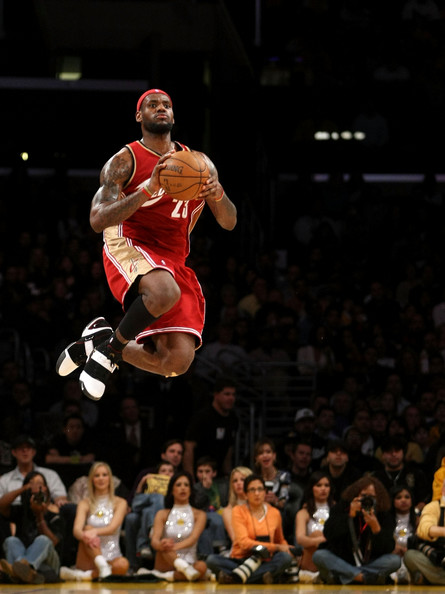
lebron tuck jump
Lebron James uses core power in flight – it’s a crunch form in space – no forced arch is necessary for height and control in jumping.  Our bodies have many ways to generate power.  We use the strategy that suits the moves we need to make.


This following story helps to highlight the difference in the type of training needed for true athletics and in general, a healthy body:  This is taken from a mountain biking tutorial on technique.  Commonly done in every field of life, we interview experts on their technique hoping to find that elusive secret tip.  The interviewer in this story has two expert competitive mountain bike riders share their tips on banking high speed downhill turns.  Strength alone will not get you through this.  It requires skill, focus, coordination, practice etc etc.    The interviewer is not a rider.  But, everyone’s an expert (ha ha), so he tries instead to analyze how to bank a fast mountain bike turn.  In the interview (link below) it does get a bit painful as he’s trying to sound a bit expert at something he doesn’t do… but stay with me – because this really makes the point of this post.

Our expert Jill shares some tips with the interviewer about keeping weight in the gluts on a high speed turn.  This is just solid advice for young bikers – a common enough tip and a common mistake – gotta keep the weight *back* to avoid faceplanting.  Not picking up on this classic tip or understanding dynamic movement (and apparently gravitational force), the interviewer says “better hit the weight room, ha ha“.   Good luck with that strategy.  You can’t deadlift your way through a high speed turn.  Some things require skill and control.  It is exactly this common lack of understanding that inspired this post.  Moves to train yourself for skill and control are an essential part of an athlete’s training.  Moves that encourage a healthy and integrated kinetic chain build a body that is dynamic, can heal itself and maintain function for a long, happy and Epic life.


Below is an example of Jill Kintner’s form for banking high speed turns… she is in a skillfully balanced loaded power flexion – weight back in the gluts to avoid going over the bars.  At 3mns we finally get to see Jill’s form as she banks a super sweet turn for the camera.  This is a good strategy because this will keep weight in the gluts and also “in the core”.  This form allows her to engage the deep low abs and obliques that control her hips right around the body’s center of gravity (meaning no stiff arch using spinal erectors substituting to stabilize).  Related biomechanics are the strategy boxers use in keeping a chin tuck – when the chin cocks up the back goes into extension and the lumber can arch – meaning stiff – and the human body doesn’t take a punch from a stiff spine.  It goes boom.  Timber!

jillbankturn

On youtube:  Dirt Magazine Beginner Tutorial on Banking High Speed Turns – Analysis Paralysis on the Trail: The brain is a wonderful organ; it starts working the moment you get up in the morning, and does not stop until you get to school.

In other words, the idea of “better hit the weight room”  has led to isolating essential athletic and functional movements to an isolated “core day” as if it is an option.  And over-training of forced arch forms can impede total body health, creep into sports and ruin dynamic flexibility and coordination, and finally, when the stiffness pattern sets into deep motor control patterns for movement, the lumbar usually takes the hit.  We are working bone on bone.  And then usually a shoulder goes out too.  It’s all connected in one kinetic chain.  Physics.  It’s a bear.


There Is More to Life than a Pelvic Thrust:  Too Much Kettlebell & Donkey Kicks Train a Pattern for the Spine to HyperExtend to Access Glut Drive – Train Stiff & Execute Stiff = Lose Balance, Fall Hard and Go Boom


So when we lack sufficient high intensity practice training in forms we actually use in motion,  we begin to lose strength throughout the entire kinetic chain.  This is nicknamed “leakage”- and is generally compensated for by using ligaments and bones to do work they are not designed to do.  And we get hurt.  And then for sports rehab, using theory taught by academics, too often the Physical Therapist trains us only in “neutral spine” again.  And we have more back problems.   Sound circular?  It is.


How to Guarantee You Will Need STPro Rehab – Do Everything in Rigid “Good Form” of Neutral Arch Spine

This slideshow requires JavaScript.

The coolest thing about the second graphic is the blue arrow indicating to jump forward to land on the object.  Stop and think about that a moment.  It gives the illusion of technical precision where there is none.  We should have figured out how to jump on a box when we were 8 years old.

What we do with our time is valuable.  Strength training is important.  V02Max training is important.  But our training should also be helping our bodies to move better, function efficiently and master gravity with coordination skills.  So, Let’s Go Boldly where no Weight Room Trainer Dares to Tread


Not Afraid to Go In There

whyyoushouldgointhere

Nothing opens up the mind like a punch in the face.  Martial Artists have a couple thousand years of wisdom and the experience to ignore Western academic kerfuffling and overemphasis on one-off-productized-anectodtal-research-study-hopping when it comes to training.

Not every culture is so hung up on neutral spine for strength training.  Both martial arts and gymnastics disciplines require mastery of balance in high momentum situations, controlled falling and precision landings.  So, martial arts and calisthenics are a great place to look for safe and effective lumbar flexion moves for athletics, balance training and a healthy back.

In an extreme move, Bruce Lee deliberately trained the lumbar in a huge, deep flexion move called a Jefferson Curl.   This is an advanced gymnastics training move.  It is about as “bad form” as it gets in the Western weight room setting.  It violates all the “neutral spine” and arch training theories and is typically done with a 45lb bar (or more for the competitors).  Bruce Lee often backed off the weight and went for total body muscle activation instead, he called it “tension”.   Bruce was a little guy, but he could knock a 180lb guy off stage using on a 2-inch punch range.  Source: Bruce Lee, The Art of Expressing the Human Body on amazon – life changing

Bruce Lee’s style of training included what is technically called “loaded flexion” – and if you really want to send a Western Academics into a tizzie – use that phrase and wait while the “experts” argue amongst themselves, show many charts and diagrams of anatomy… and still provide us with no answers.  Ever notice that medicine, including sports medicine, refers to itself as a “practice”?


10985184_10154014674251040_1764178116058029166_o

 Studies and statistics often leave us with inconclusive guidance.  STPro should know – STPro is, by training, a statistician.  And by experience: A Skeptic.


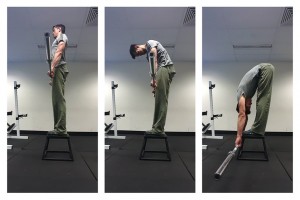
Here is a demo of Bruce Lee’s Jefferson Curl.   No generic ACE certified personal trainer would get near this.   In the image below, it is being demonstrated by a master at Elements Fitness & Martial Arts in Australia – who learned it from Olympic Gymnastics coach Christopher Sommers  (Gymnasticsbodies.com).  It has many safety prerequisites, especially, long hamstring length making it dangerous for many athletes and bodies in general.

Jefferson-Curl-300x200— Image used without permission — But here is the linkFrom a Great Site Elements Fitness & Martial Arts — will leave this up unless they take issue.   This is a cool site and the trainers share wisdom and insights on probably an athlete’s greatest challenge — no it’s not winning — it’s flexibility (ugh!).

This post won’t cover the Jefferson Curl – STPro will present more familiar forms that achieve similar results.   These more familiar forms are Low Risk – High Return.  STPro would put the Jefferson Curl in High Risk – Moderate Return.  Unless you are working Olympic Rings – in which case – you take the risk and just do it because coach says so.

So, now let’s pause to test ourselves…


Mastery: Test Yourself

When in real action, it’s wise to stick with our go-to strategies for playing our sport.  But in training, it’s useful to bring awareness to the fundamentals and evaluate what we may do or change to make ourselves better.  Following the training style of the great Chuck Noll (Steelers Coaching Legend) – Do The Essentials Better Than Anyone Else.  And to test essentials, simple is better.  Using a wall and gravity, check in on your core control – if you can land this soft, then the core is controlling the movement against gravity and the lumbar can handle loaded flexion (the load is your body weight plus acceleration force, in physics F=MA).

From Parkour, an intense urban style of obstacle course running based on military tactics… try a Soft Depth Drop.  How is your landing?   Were you quiet and ready to move into action – or clunky and falling backwards? (Unless you’re in the paint trying to win an Academy Award from the refs, ha ha!)

https://www.youtube.com/watch?v=D554BAc5E0E


What about stability in coordinated in action?  How good are you at tug of war – does your back hurt every time the rope jerks?  Can you take a punch?  Can you army crawl for 10 yards?   Play defense in football?  Could you tackle a thief?

Be Prepared to Go In There

batgirl stephanie-brown-batgirl-suit


But wait, what about Pro athletes, what do they do?  Yes. Their training is heavy on core and includes lumbar flexion under bodyweight loads.  LeBron James does Pilates because it helps train landing mechanics of the core to land “soft” – in a round lumbar if he needs to depending on the situation – which prevents injury, more effectively captures ground force reaction and sets him up to spring forward on the court.

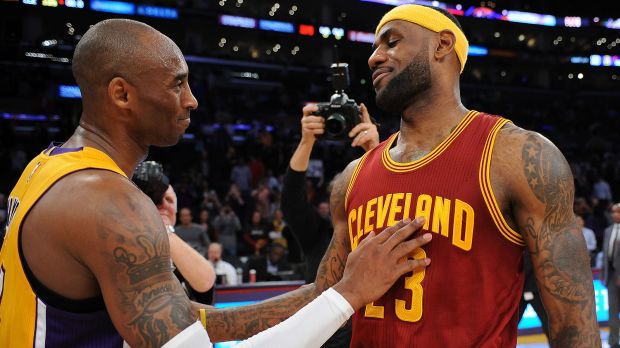
lebronkobe
Kobe Bryant and LeBron James.  Basketball players train the core for smooth, powerful jumping and landing patterns using Pilates.  TRX and Bodyweight versions of these moves are presented below.


STPro trains both LeBron James and Antonio Brown’s  (WR Steelers) routines in the studio – but they are outside the scope of a blog post and require equipment.  But there are closely related moves that everyone can do without the fancy equipment.  These are presented below and use only a mat and a TRX.  When trained in the right form, they are highly effective.


Less Talk, More Action

The Moves:

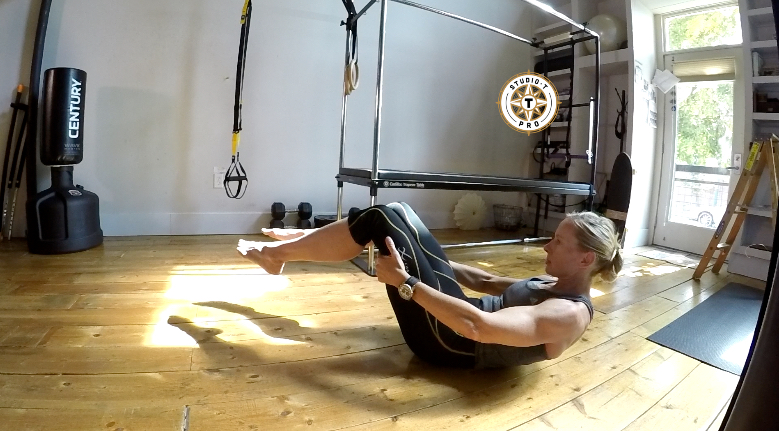
  1. Test Yourself – Boat Roll
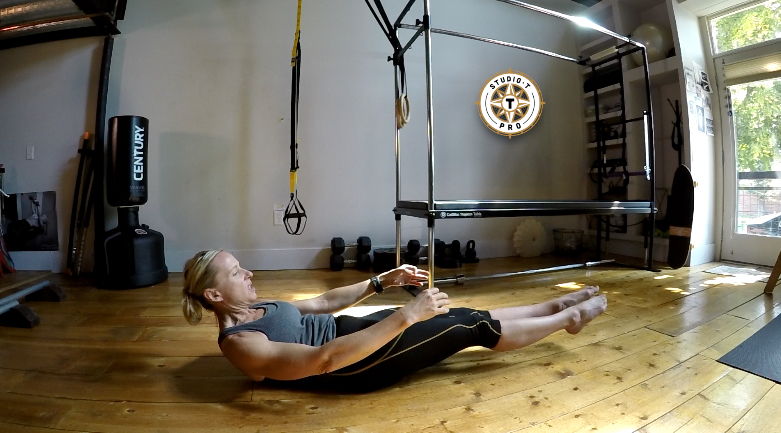
  2. Hollow Abs with Michael Phelps Style Flutter Kicks
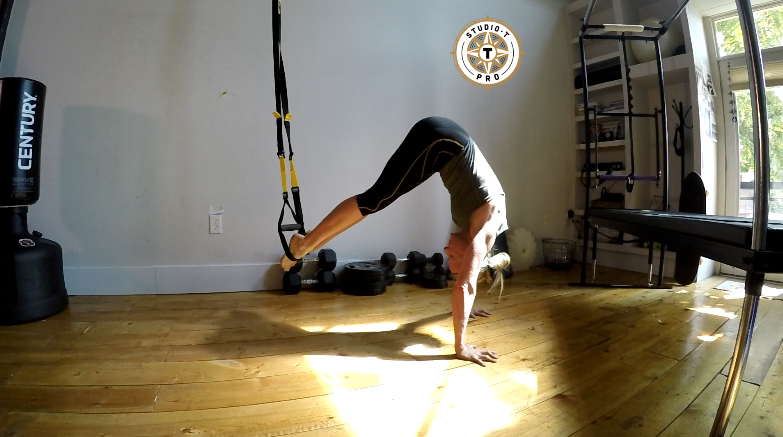
  3. TRX Atomic Balance Pike
  4. Explosive Tuck-Ups
  5. TRX Atomic Balance Crunch

And just in case your back-up plan… needs a back-up plan.  Focus on the Essentials – do the essentials better than anyone else…

What to Do if Your Durn Back Feels Stuck:

  1. LeBron James Oblique Hold (upper back)
  2. Training Trick Lumbar Release (lower back)


Sets & Reps

Can do these daily.  Test yourself and see where you are now.  Use the sequence – this will test your skill with all muscles activated (your best effort, like when you’re in the zone).  Time how long you can hold the form and start there.  Ideally, able to do a 20mn routine of all these moves – in sequence – with 1 set of Boat Roll (warmup) and 3 sets of 2-5.  Reps here is time under tension – aim for 48 secs to 60 secs.  4 moves – 1mn, 3 rounds = 12mns.  Add warmup and recovery breaks – about 20mns total.  The Boat Roll, Tuck-Ups and TRX Atomic Balance crunch pair well worked into a weight training session that includes Pulling (Rows) and Deadlifts.  Try it – email STPro if these two moves makes you stronger in pulling.

Working these with integrity will bring immediate results – but most noticeable over the course of a year: increased balance, increased control in momentum, hopefully a happy lumbar, improved running form, increased jump height, and maybe (depending on your current core strength) increased glut and back strength (meaning – throw a few more plates on the bar).

If you currently have disc issues, these moves are contraindicated.  As soon as the disc heals, you need to rebuild core control and strength with these moves as a priority.  But during recovery, it is safest to hit the core with push-ups and planks – this is only effective with the right muscle activation.  Push-up Mechanics for Engineers – It’s All About Muscle Activation


Test Yourself – Boat Roll

motorcross crash
STPro teaches the Boat Roll using arms and legs.  In real life, you may be hanging onto something for dear life.  Tuck the tailbone and roll with it.  Embrace the Suck and Live to fight another day.


BOAT ROLL

demo boat roll


  1. Release the lumbar arch stiffness by aiming tailbone down the back side of the legs
  2. Contract abs only – do this all from abs – this uses reciprocal inhibition – meaning lumbar just stabilizes – suspend your torso from your abs only
  3. If you’re miserable in the abs, you got the move.  While working the set, STPro deliberately nags and asks people if they can feel the difference in muscle engagement from the lumbar to the abs.  If they can’t talk and answer the question, they are doing it right.  And if they are too focused to even give a look up (trainers live for the Stink Eye), then that is perfect! This is a control power roll.  Very focused.
  4. Breathing matters here – exhale deeply from low belly (that air pocket at the bottom of the diaphragm blocks the move) – breathe into the upper back – this is very athletic – we use complex breathing patterns in real life
  5. THIS MOVE IS A KEEPER if you feel tight in squatting or stiff in running.  We use this function of the core all the time, in everything.  Great as a release for lumbar stiffness after “Back Day” or from pounding on the court… or just feeling stiff.


Hollow Ab Flutter Kicks Like Michael Phelps

MichaelPhelps
In the butterfly stroke, Michael Phelps holds his line using a small coordinated flutter kick to support the body while the arms raise forward.  In this picture, that kick would actually come about right now.  If he arched at this point in the kick, he would drag or sink.  The following moves train this deep core control – and taking it from the floor to the TRX simulates the same athletic angle to gravity.  In other words, get the butt off the ground, like real life, give the core a chance to train at realistic angles to gravity.


No, STPro is not suggesting simple mindless leg lifts and flutters on the beach so you can get overdeveloped abs that scare small children.  This familiar form is often used for ab puffing – and even done wrong will accomplish some puff.  But here’s the thing, in terms of core control – “Beach Abs” demos of this usually come with much arching, wheezing, chin jutting, shoulder jutting, exhausted sounding inefficient non-athletic breathing patterns and lumbar misery.  And a tan.  From an athletic perspective, let’s get the most out of the form.  Your abs will look just fine from the center of the podium holding your medal.

HOLLOW AB FLUTTER KICKS

demo hollow flutter

  1. Aim tailbone down the backsides of the legs – this is called Posterior Pelvic Tilt (PPT) – it may feel like a butt tuck – but it’s just a bit of a tiltalmost tucking – but not a full tuck – just a slight tilt to get out of a stiff arch.  Force that PPT like it’s the end of the world
  2. Lock the form squeezing the gluts – not too much, not too little.  The gluts and deep low abs work as a force couple to prevent rotation around the joint… meaning that strong desire to arch into extension here (arching in this makes a stiff lever vs gravity using bone on bone, aka, training for injury).  Lock the form to hold with just enough glut power to force that line.  This force lock with gluts and low abs is your working  “sweet spot”.  Well, it doesn’t feel sweet when you find it, it actually feels miserable.  Own that misery – that is your body training to hold a line against rotational torque forces.  Here, we are training to master gravity.  Not let gravity master us. (A German folk expression: Squeeze your *ss and get through it.)
  3. The flutters are very small movements in legs – like an inch, with control – the goal is perturbing the attachments on the lumbar – big moves are a cheat, that’s taking a break and using momentum instead of stabilizing
  4. Test the form while working it – put fingers inside of each hip bone – if can feel the contraction fire stiff underneath the fingers – that is the core in training to hold and drive power.  This test in practice seems to be the most effective: awareness and focus on what you are trying to train.  Once folks get this, STPro can see the light bulb turn on – they “found”  those deep stabilizers.  They still look miserable – but now the misery has a purpose.
  5. If you’re doing it right it will be almost impossible by 48 seconds… aim for a set 60 seconds.  Only 3 rounds of 60 seconds MAX per workout.  These deep low ab muscles are used in every athletic action.  Overdoing this before heavy lifts or activity can actually cause injury by lack of core control from exhausted stabilizers – unless you are advanced and know what you’re getting into, then by all means go for it.
  6. Breathing – you can’t take deep belly breaths – not if the low abs are firing – the low abs are locking that tilt (PPT).  That locked PPT is called the “hollow ab” because the low abs suck up and in.  It does not feel hollow, however.  It feels like hell.  Stay calm.  Breath into upper lungs, especially the upper back.  This is excellent training for real type of breathing used in sports and real life.  This upper lung breathing also opens up lung capacity – great for racing and Vo2 Max training.  Also, excellent for defeating the effect of aging on atrophied use of lung capacity.


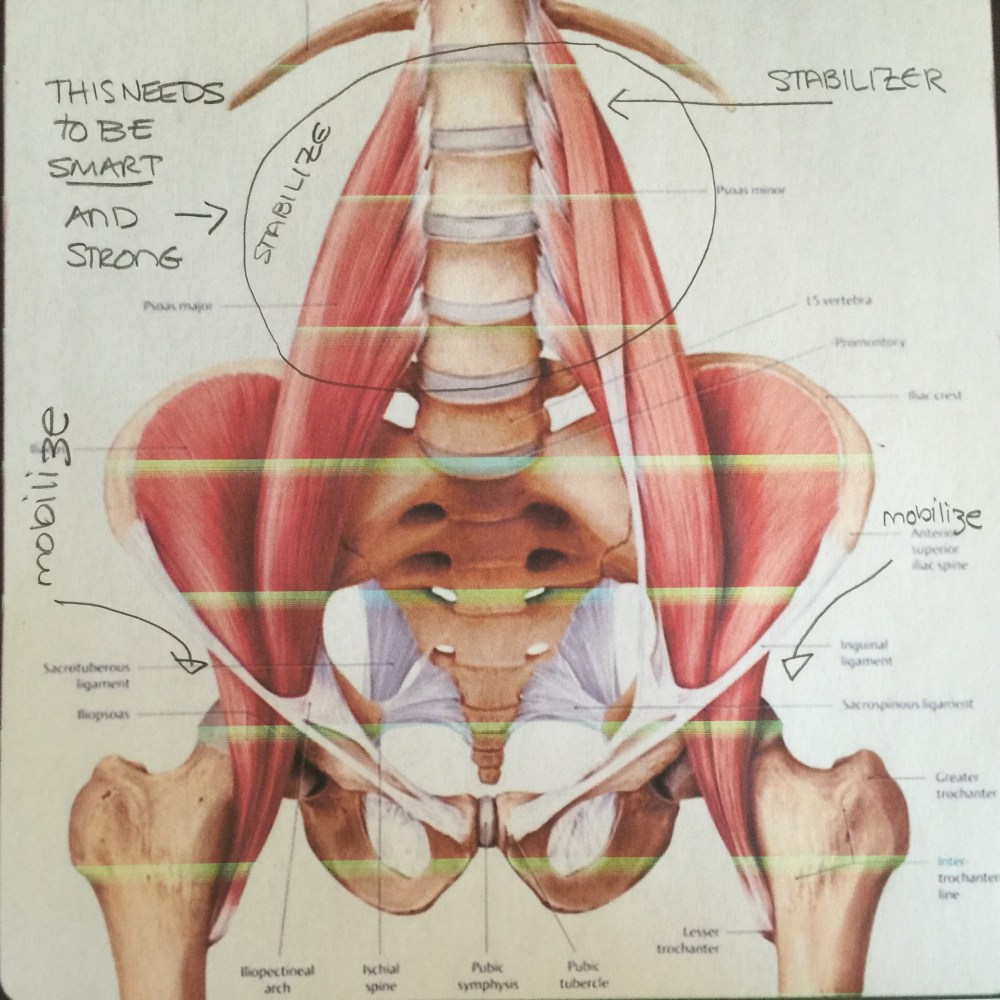
The STPro trainer please don’t quit speech: These things really stink, but there is a method to the madness.  What we are trying to accomplish is to train the upper hip flexors that attach on the lumbar to stabilize – while we train the bottom of the hip flexors to mobilize.  (Like setting the shocks for the appropriate anticipated instability.)  Making big leg swings defeats the purpose.  It doesn’t take that much for the hip flexor to lift the petty weight of the leg – it takes a lot of control for the upper hip flexors to stabilize the lumbar while the legs move.  This style of training is the secret sauce.  As Antonio Brown says, “Don’t want to skip the little muscles and get out of whack.”

IMG_1509


TRX Atomic Pike with Hold

motorcross tuck
STPro trains the TRX Atomic Pike like a balance game.  Like real action – holding a line with bumps and action.   Allowing *no arch* in the TRX Atomic Pike forces deep internal stabilizers to fire.  The spine holds the shape while arms and legs are busy doing other things.  The “little guys” (internal obliques, deep low abs, external obliques and even smaller stabilizers on the spine and those tiny attachments from the hip flexors) are the key to holding a functional power shape.  Arching and hyperextending = face plant.  It’s really gonna hurt when that bike lands on you.


TRX ATOMIC BALANCE PIKE

demo atomic pike

  1. Try to almost vault over shoulders – hold the balance from deep low abs – pay attention to how high can you go before you fall and note any weaknesses in abs (train your range)
  2. Press hard into straps for activation internal obliques hold the pelvic tilt
  3. Press floor away strongly through arms
  4. Stay in any “shakes” – those are core stabilizers doing their mini repetitions of balance training, like little mini bicep curls for stabilizers
  5. In practice, while folks are doing the move, STPro has them visualize a string on their lumbar that is pulling them up.  See how high you can go – the higher you go, the deeper the core.  Make sure to exhale for more height – this empties the bottom of the diaphragm and gets that air pocket out of the way.
  6. Come down one rep before failing – this protects shoulder joint


Training Tip – Go Slow or You Don’t Own the Move

You’ll see people grunting and heaving and banging these things out real sloppy to get them over with – bad reps on this won’t do much except maybe some vanity puff in the abs.

engineer

For the Benefit…  Go Where You’re Weak and Out of Balance and Hang Out There – Give the Body a Chance to Run Some Slow Practice Reps to Train Efficiency.  This will translate directly into increased control in sports, increased overall balance and a very happy lumbar & SI joint.


Precautions for Atomic Pikes.  Avoid if: Hamstrings are too stiff to straighten legs and pike.  To test hamstring length: sit with straight back against wall with two spots touching- 1)  sacrum (bony spine part in between the SI dimples) and 2) the bony spine part between the shoulder blades on the wall (this is your natural standing back).  Sit like this with legs out in front and long.  If you have to bend knees or slump to straighten the legs, then hamstrings aren’t at a 90dg length needed for sports.  This is called the L-Sit test.  No need to pay STPro $100/hr to sit next to a wall when you can do this yourself.  With short hamstrings, all of these essential forms will be limited and lumbar is at risk in not only these moves, but in all athletics.  The hamstrings pull on the lumbar and can do damage.


Explosive Tuck Ups

parkourforms
May 13, 2015. Red Bull Athletes and Professional Freerunners Jason Paul and Pavel Petkuns  – the background is a Ukemi fall form and foreground a tuck-jump form.  Patterns trained and stored deep in muscle memory execute with lighting speed.  And no overthinking.  Which is good, because there is no time to think.  Just time to do.


EXPLOSIVE HOLLOW AB HOLD TUCK-UPS

  1. Remember the roll-down with bent arms from the first exercise? That move is in this sequence to activate the deep low abs and release the lumbar stiffness (if there is any) for tuck-ups
  2. Make this controlled and precise
  3. Snap at top with an full exhale
  4. Make it explosive
  5. Shoot legs back out to the full Hollow Abs from the Flutter Kicks move above – do not allow back to arch – fight the arch – remember that tilt?  Force that PPT tilt like it is the end of the world
  6. STPro teaches this in sequence – just doing these “cold” without the Boat Roll or another type of lumbar release can make this feel “jerky” or stiff.  This move should take much effort – and done smoothly.  Think jump shot takeoff.  Or backflip.  Finesse it.  Exert as much as necessary, as little as possible.


Grand Finale – TRX Atomic Balance Crunch

 Whatever your line is… train to hold it.

TRX ATOMIC BALANCE CRUNCH

demo atomic crunch

  1. Round tailbone all the way in and hold using control from the front side
  2. See if can get higher in the roll – by lifting through abs below the belly button – use all abs and shoulders to control this move – this is where true athletic benefit is – training the low to stabilize in tandem with the shoulder girdle (think upper obliques & serratus)
  3. Push the floor away – really keep pushing the floor away – we’re protracting shoulders through the serratus (the boxer’s muscle) here – stay in that push, no breaks – breaking that protraction risks shoulder injury – push like you wanna vault into a roll, but don’t… stay in that shaky instability
  4. Control the roll back to the flat back position – release all the way into proper push-up form, keep pushing the floor away – no shoulder sagging and no sagging in lumbar – really press feet into straps, this feet pressing bit activates quad and internal obliques – think smooth jump shot
  5. This move tends to be everyone’s favorite.  STPro prefers this to core on a fitball or from plank because of the power through the quads and the lower obliques – and the shoulder press strength benefits.  This is a very productive move.  Short quality sets more often in the week bring the biggest  benefits – and can even improve extension and load bearing weight lifting forms – so it is possible to work smarter (from the core piece) and harder.  BAM!


What to Do if Your Durn Back Feels Stuck:

  1. LeBron James Oblique Hold (upper back)
  2. Training Trick Lumbar Release (lower back)

Below, LeBron is holding a related form referred to as a “chest lift”.  His upper trunk is being supported by the core, especially at the solar plexus (upper obliques – at the bottom of the sternum, our Solar Plexus).  The trick is to roll in the ribs until the shoulder blades come off.  Looks easy, but this thing is a bear.

lebronchestlift2lebronchestlift

LeBron James holding the chest lift form while jumping and landing.  Just holding the chest lift doesn’t look like much – but it is painful and an ab burner – especially for men with well developed upper body mass – these pro players will hold that form and practice landing jumps with the abs and core in full activation mode.   What’s really going on here is NMC or neuromuscular control training.  In English – strength isn’t enough – jumps and landings are multi-joint complicated movements.  Instead of nitpicking form and trying to get it – this allows the athlete to practice holding the line and working through landing mechanics.  The body trains itself.  The angle of the machine allows LeBron’s nervous system to fire repeated jumping patterns without incurring injury on bad landings.  The key to this – hold a steady chest lift form firing core stabilizers the whole time – this trains for smooth execution in a real jump or landing.  Plenty of great repeatable studies for jump mechanic improvements with this NMC stuff (neuromuscular control – not just theory – it can be tested and repeated by other trainers).  STPro loves loves loves NMC because it works and allows people to train themselves.  Nobody knows your body… like your body.


ESSENTIALS: RIB CAGE MOBILITY & UPPER OBLIQUE STRENGTH AT SOLAR PLEXUS


TRAINING TRICK: LUMBAR RELEASE


Our bodies function in realtime using neural patterns stored deep in muscle memory.  These become the body’s go-tos.  Training limited extension forms can overwrite other patterns and “creep in”.  Solid training requires balanced strength – including lumbar power and glut drive in flexion (PPT).

Willow_Koerber_2010_Worlds2


A life spent making mistakes is more useful than a life spent doing nothing. – George Bernard Shaw

studiotpro_color


Pre-reqs 3 sets 1mn each of the above for STPro Series: CrashFit Happens(TM),  Muay Thai Latte(TM), The Big Game Hunter(TM), Black, Gray & Scrappy Ops(TM)

Applications:

  • Spine rehab (as indicated)
  • Stenosis management
  • Spine prehab & protection for athletes
  • Balance in momentum
    • MTB, cycling, motorcross, cyclo-cross etc
    • Martial arts kicks
    • Ballet
  • Precision & Control
    • Improved Marksmanship
    • Resisting percussive force reaction
    • High speed control
    • Basketball skill
  • Crash injury prevention
    • All momentum sports
    • Military Service personnel & Law Enforcement
    • All field sports, especially Football & Rugby
  • Soft landing mechanics
    • Basketball, Parkour, Ballet
    • All track and field sports


Copyright Studio T, LLC 2016